Note di Matteo


#reti

Ottimizzazioni di un'altra era nell'app Facebook:

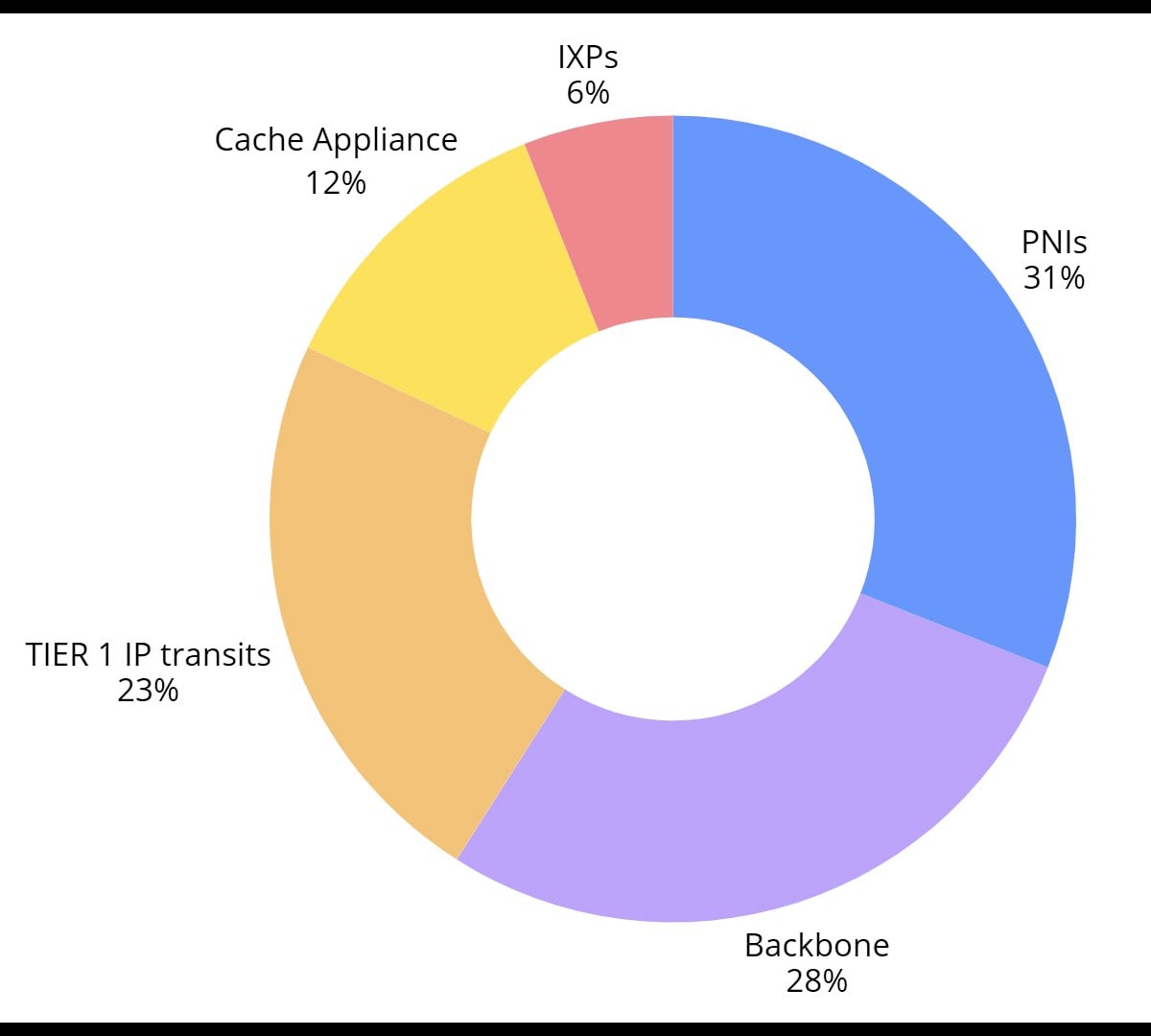
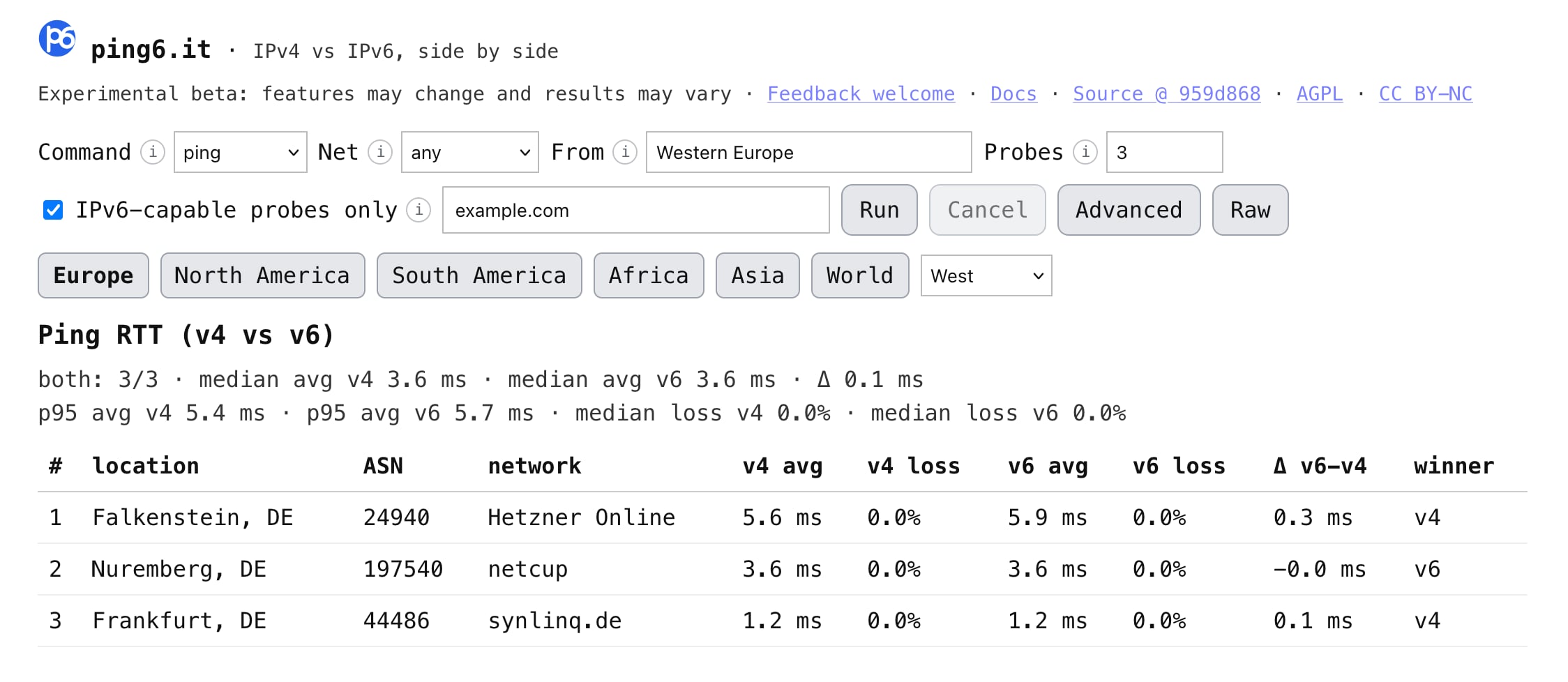
In 2012 we took this wild ride at mobile infra at Facebook when trying to reduce the several-seconds long load time for “Newsfeed”. A few people worked on different approaches. Something we quickly realized was that setting up a connection with TCP and TLS was incredibly slow on mobile networks at the time. The fix was to have just one, keep it alive and multiplex. Shaved a whole second off. But it was still slow. Several people were convince that us sending JSON was the problem, so two different teams started to work on compact binary encoding. After a lot of experimentation what actually worked out best was to send JSON with ordered fields and a compile-time generated parser. Turns out both our iOS and Android app would do something silly like: 1) read all JSON data from server into a buffer, 2) decode that buffer with a generic JSON decoder into lists & dicts, 3) traverse those structures and build the final struct/class tree. Oh and another neat thing we eventually did—when the network connection needed to be setup—was to send an optimistic UDP packet to the server saying “get started fetching data for the following query”; once the real connection was established, TLS handshake completed and user session authenticated, the response was already ready to be sent back.

#198 /
3 dicembre 2025
/
23:39
/ #dev#reti

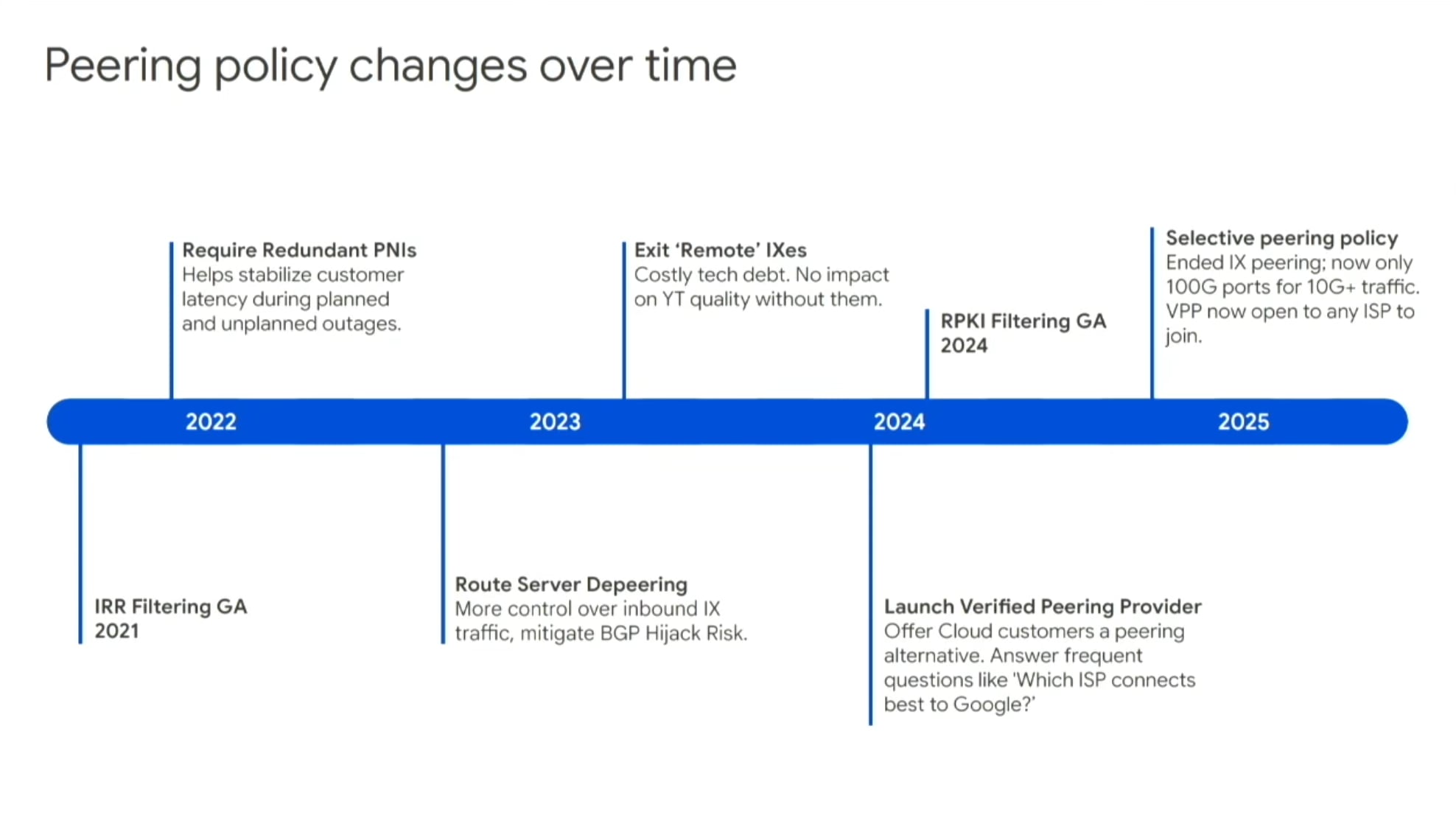
Di recente Google ha cambiato la policy di peering per quanto riguarda Google Cloud e YouTube:

  • Niente più nuovi peering negli IXP pubblici.
  • PNI min. 100 Gbps su traffico minimo di 10 Gbps di picco (settlement free).
  • Per tutto il resto il consiglio è di affidarsi a uno degli ISP "certificati" di questa lista (IP transit a pagamento, presumo), che hanno almeno due interconnessioni in almeno un'area metropolitana di Google.

(video)

Private peering allows a network to connect directly with Google over a dedicated physical link known as a private network interconnect (PNI).

Google offers 100G and 400G private peering (PNI) at the facilities listed in our PeeringDB entry. Note that this type of direct peering occurs at common physical locations, and both Google and any peering network bear their own costs in reaching any such location.

Google no longer accepts new peering requests at internet exchanges (IXPs). However, Google maintains dedicated connectivity to the internet exchanges (IXPs) listed in our PeeringDB entry. We also maintain existing BGP sessions across internet exchanges where we are connected. For networks who do not meet our PNI requirements Google will serve those networks via indirect paths.

(peering.google.com)

#169 /
18 novembre 2025
/
22:42
/ #reti#google


In Francia i provider DNS devono bloccare domini su richiesta anche in assenza di una sentenza (ricorda qualcosa...):

We sought legal advice, and unfortunately discovered that French law, specifically Article 6-I-7 of the Loi pour la Confiance dans l'Économie Numérique (LCEN), might actually require us to respond and apply blocking measures, at least for French users.

That said, this whole situation shows just how inadequate this regulation is. Such decisions should be made by a court — a private company shouldn’t have to decide what counts as “illegal” content under threat of legal action.

(Adguard)

#155 /
16 novembre 2025
/
10:46
/ #dns#reti#legal

Anche Vodafone DE adotta la strategia del depeering, sulla scia di Deutsche Telekom:

By the end of 2025, Vodafone will have completely withdrawn from every public internet exchange in Germany, including DE-CIX Frankfurt, the largest internet exchange on the planet. Instead, all traffic will flow through a single company called Inter.link, which possibly will charge content providers based on how much data they send to Vodafone customers. It might be the telecom equivalent of a landlord announcing they're demolishing all the sidewalks in town and replacing them with a private toll road.

[...]

Think about that: you pay Vodafone for internet access. YouTube pays Inter.link for the privilege of serving you. Both ends pay, but the service you receive gets worse because the architecture degrades and bottlenecks concentrate through fewer connection points. Vodafone saves money on operational overhead while extracting new revenue from content providers. You, the customer, subsidize this twice and get a degraded product.

[...]

You'll have a two-tiered internet: fast lanes for services that pay, slow lanes for everything else. [...] When you pay Vodafone for internet service, you think you're buying neutral access to the global internet. You're not. You're buying access to Vodafone's network, and Vodafone controls how well that network connects to everything else.

Dall'ottimo articolo di Coffee.link che spiega bene il contesto e il precedente di DT e relativi notevoli effetti sulla qualità di Internet.

#134 /
8 novembre 2025
/
14:50
/ #reti

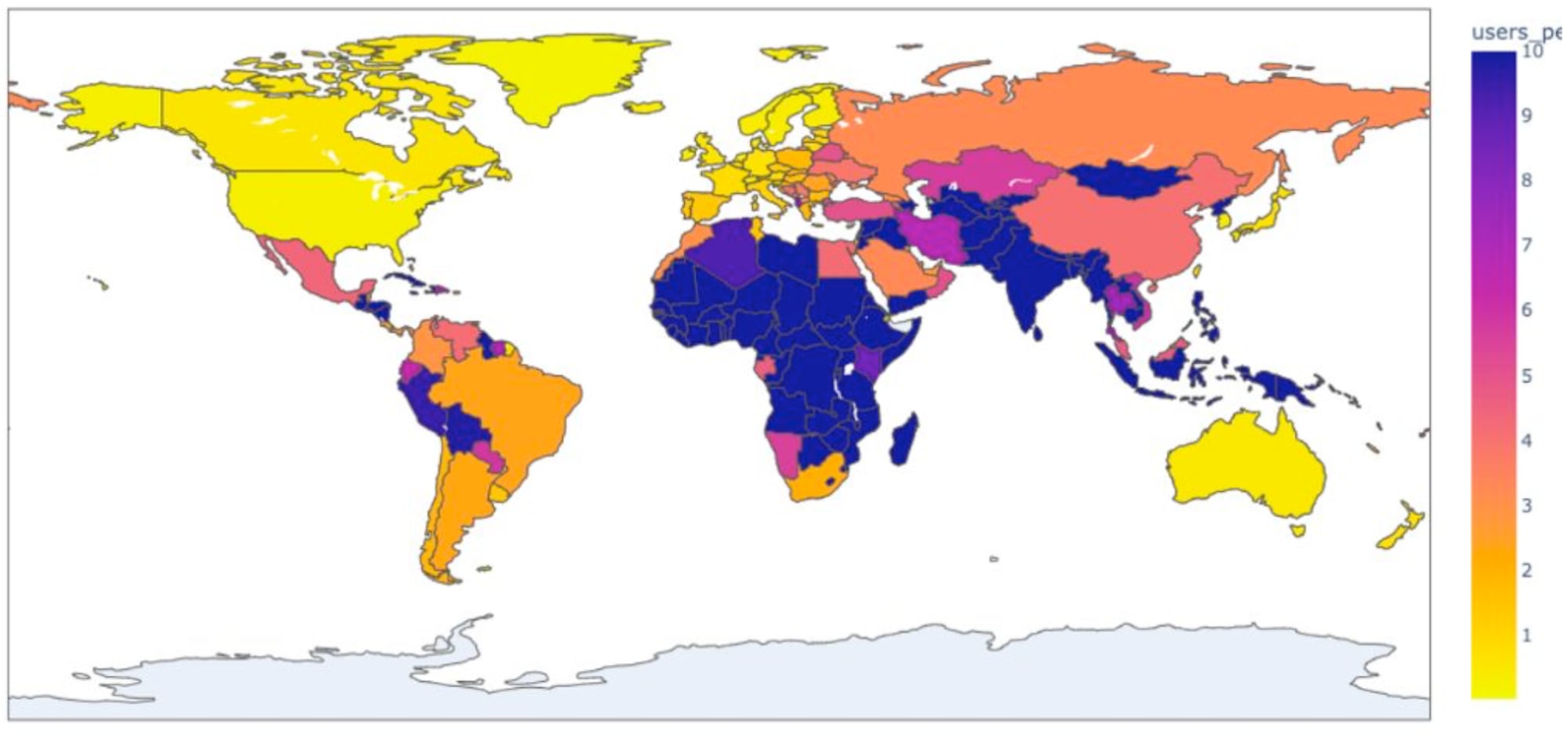
Numero di utenti per indirizzo IP nel mondo:

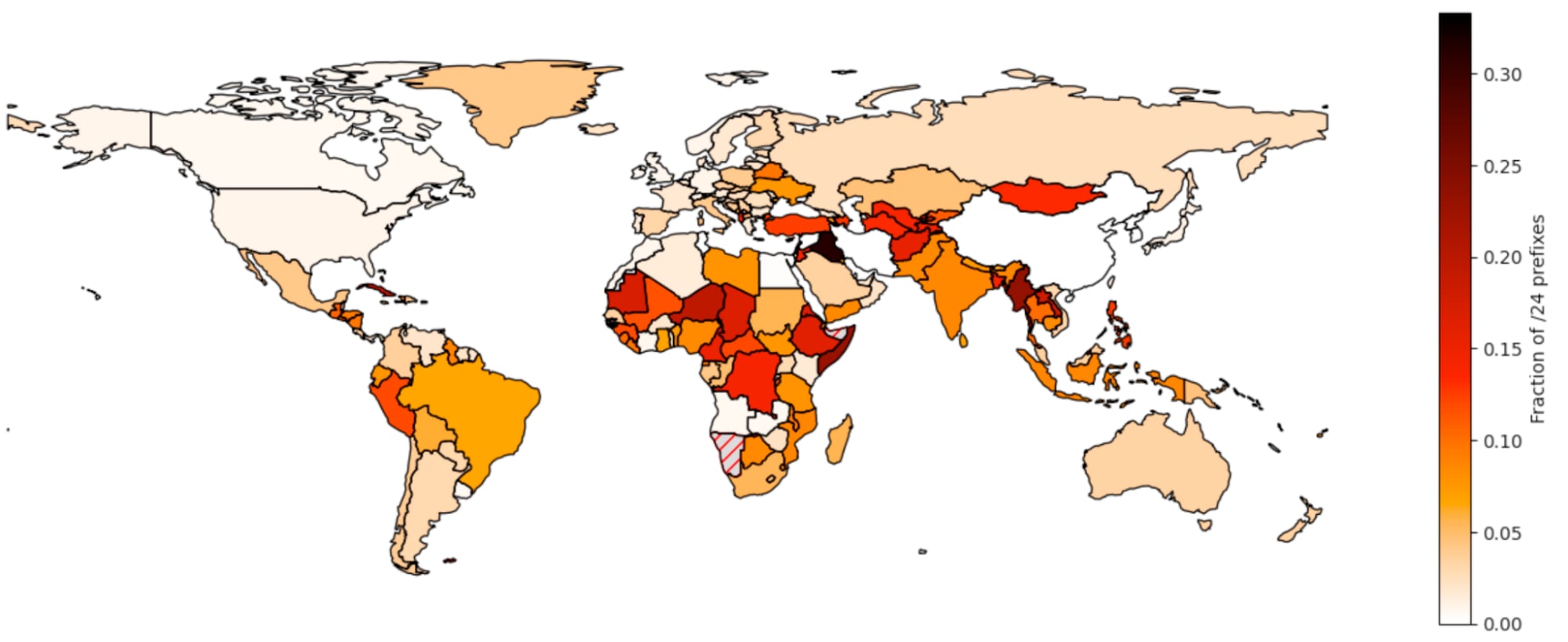
E l'uso di CGNAT, così come rilevato da un algoritmo di Cloudflare:

(Cloudflare)

#122 /
30 ottobre 2025
/
11:52
/ #reti