How Mux chooses a CDN in 9.9ms. Mux.com ha costruito internamente un CDN router dopo aver provato diversi servizi nel corso degli anni. Molti dettagli tecnici, scegliere la CDN da usare per uno specifico utente in un sistema multi-CDN è un problema più complesso di quello che sembra.
#video
Come compilare ffmpeg
Segue spontaneamente dal post precedente: come si compila ffmpeg?
Per Linux e macOS esiste uno script chiamato ffmpeg-build-script che scarica il sorgente di tutte le dipendenze necessarie, le compila una alla volta e poi compila ffmpeg creando il binario. Richiede diversi minuti e usa molta CPU. Per includere libfdk_aac, basta usare:
./build-ffmpeg --build --enable-gpl-and-non-free
Su macOS c'è anche un tap Homebrew di terze parti che si occupa della compilazione. Le dipendenze sono scaricate tramite Homebrew. Per includere libfdk_aac:
brew install homebrew-ffmpeg/ffmpeg/ffmpeg --with-fdk-aac
oppure
brew install homebrew-ffmpeg/ffmpeg/ffmpeg --enable-nonfree
Qua tutte le opzioni.
ffmpeg AAC
ffmpeg 9.1 conterrà un nuovo encoder audio AAC che secondo i benchmark potrebbe essere il miglior encoder AAC disponibile. Dopo anni e anni in cui i maintainer di ffmpeg hanno negato che l'encoder AAC avesse problemi (quando invece presentava evidenti artefatti anche a bitrate altri), finalmente qualcosa si è mosso. Il nuovo encoder però non supporta VBR ed è ottimizzato per sampling rate 48 kHz. In quei casi conviene continuare a usare libfdk_aac (Fraunhofer AAC), che richiede però di compilarsi ffmpeg perché la licenza non ne consente la distribuzione. Comunque buono che il default sarà di buona qualità senza ricorrere a libfdk_aac nella maggior parte dei casi.
I Could've Rickrolled the Entire FIFA World Cup. All I Needed Was My ID. La piattaforma di gestione del broadcast dei mondiali di calcio era praticamente ad accesso libero. Un po' di screenshot di com'è fatta e come funziona.
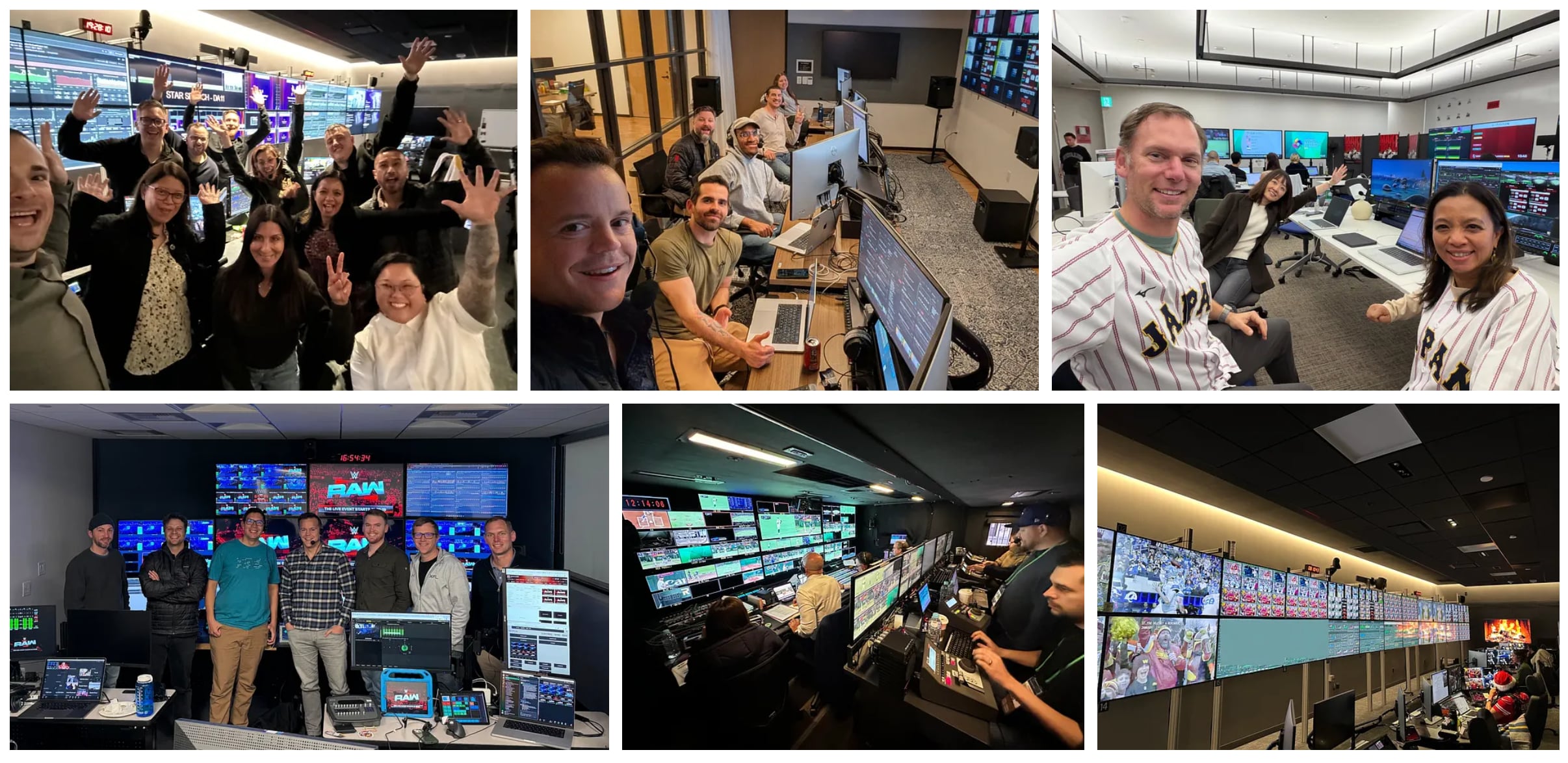
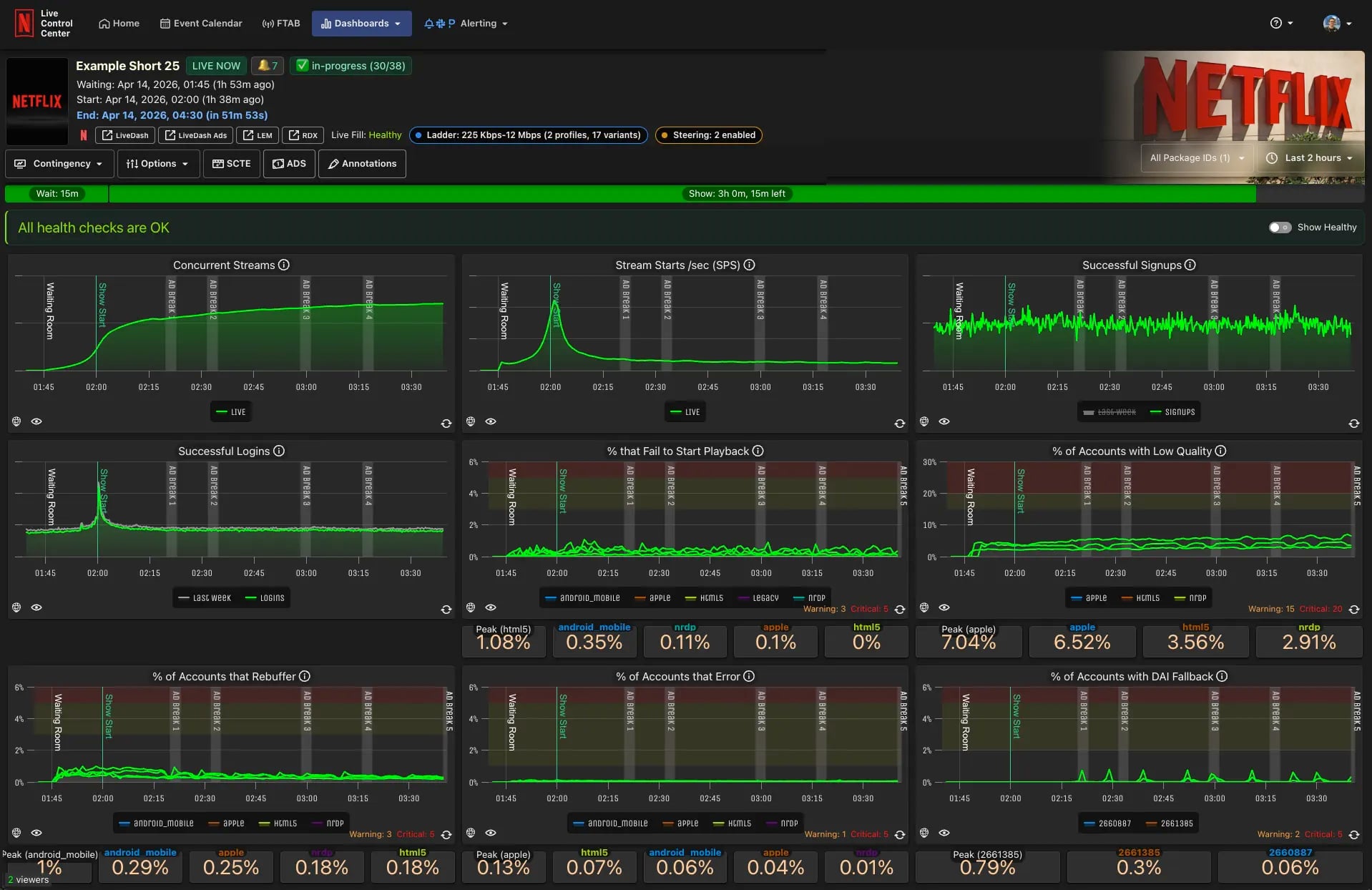
The Human Infrastructure: How Netflix Built the Operations Layer Behind Live at Scale. Un po' di backstage della nuova linea di business di Netflix: gli eventi live.
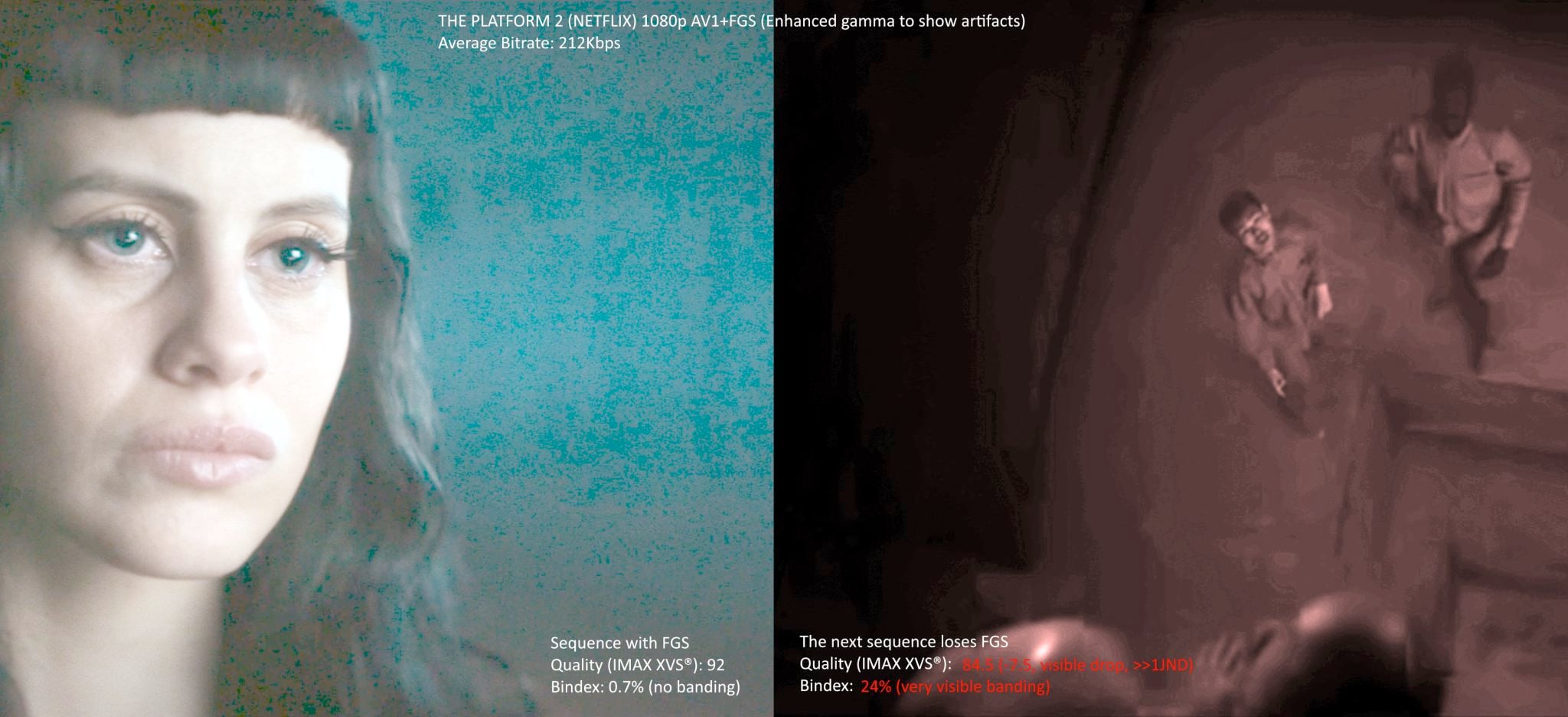
Netflix ora usa la film grain synthesis abbassando ulteriormente il bitrate AV1, addirittura fino a 200 kbps. In molti casi la qualità migliora (la grana della pellicola se non viene trattata in modo dedicato è difficilmente comprimibile), ma in alcuni la compressione è troppo aggressiva e compare l'effetto banding.
𝗦𝘁𝗿𝗮𝗻𝗴𝗲𝗿 𝗧𝗵𝗶𝗻𝗴𝘀 𝗦𝟱: from 517Kbps to 1493Kbps depending on the episode, with an average of 857Kbps
𝗦𝗮𝗻𝗱𝗺𝗮𝗻 𝗦𝟮: from 367Kbps to 786Kbps depending on the episode, with an average of 533Kbps
𝗕𝗿𝗶𝗱𝗴𝗲𝗿𝘁𝗼𝗻 𝗦𝟰: average 974Kbps
𝗣𝗮𝘀𝘀𝗲𝗻𝗴𝗲𝗿: average 889Kbps
𝗗𝘂𝗻𝗲 𝟮: average 523Kbps
𝗜𝗻𝘁𝗲𝗿𝘀𝘁𝗲𝗹𝗹𝗮𝗿: average 939Kbps
𝗧𝗵𝗲 𝗔𝗿𝗿𝗶𝘃𝗮𝗹: 331Kbps !
And finally
𝗧𝗵𝗲 𝗣𝗹𝗮𝘁𝗳𝗼𝗿𝗺 𝟮: 212Kbps!!!
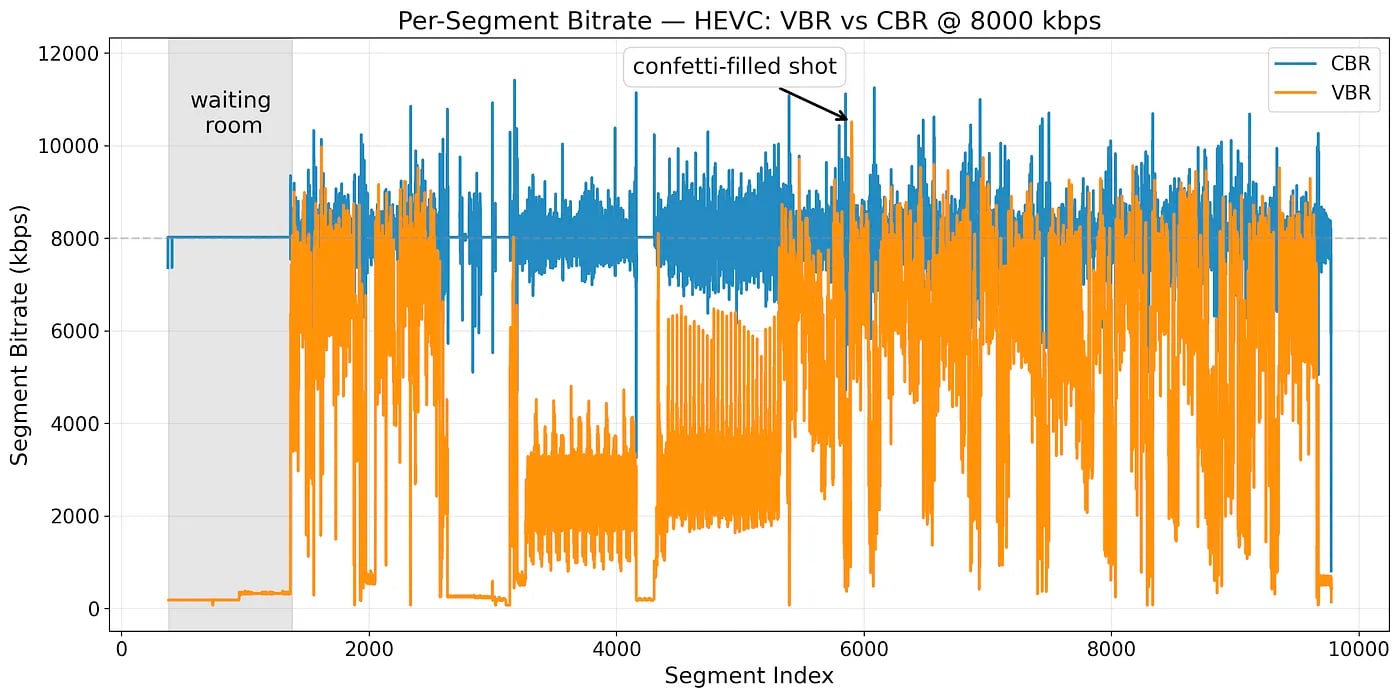
Netflix ora usa VBR per gli eventi live, cosa che ha richiesto di cambiare la logica di assegnazione del traffico ai server di delivery:
The problem surfaces when the content changes. A fight starts, confetti begins to fall, or the camera cuts to a highly detailed, fast‑moving shot. To preserve quality, VBR may increase the bitrate to 6, 7, or 8 Mbps on the very next segments. If the server has admitted many additional sessions during the preceding low‑bitrate period, the aggregate traffic can suddenly exceed what the network link or NIC can sustain.
[...]
Our fix was to change how we decide whether a server can take more sessions. Instead of basing that decision only on current traffic, we reserve capacity based on each stream’s nominal bitrate, not just what it happens to be using at that moment. Even if a VBR stream is currently in a very cheap, low‑bitrate phase, we still treat it as something that can quickly return to its nominal rate.
FFmpeg at Meta: Media Processing at Scale. Meta spiega come usa FFmpeg per l'elaborazione di più di un 1 miliardo di video al giorno, e di come hanno smesso di usare un fork interno dopo aver integrato l'encoding parallelo e la generazione di metriche real-time (in-loop decoder) nella versione open source. Meta mantiene comunque delle patch per il supporto agli encoder hardware ASIC proprietari, ma restando in sync con ffmpeg open source.
Anno 2026. Le Olimpiadi Milano-Cortina su Rai Play in 720p 25 fps. Il festival di Sanremo prodotto e trasmesso in 4K sul DTT ma la scritta in overlay pubblicizza tivùsat, che non ha nessuno, mentre lo streaming è sempre in 720p, l'on demand pure in 720p, i video su YouTube in 720p (!!!).
Glow up di Brightcove dopo l'acquisizione da parte di Bending Spoons: nuovo sito, numerose nuove feature in pochissimi mesi e una consistente roadmap di prodotto per il 2026.
Scrive Dan Rayburn, esperto commentatore del settore:
For those suggesting that Brightcove is no longer in the market or that everyone has been fired since the Bending Spoons acquisition, that's far from reality. In the eleven months since being acquired by Bending Spoons, Brightcove has added more features, functionality, and focus than standalone Brightcove ever achieved in the same period. Looking inside my Brightcove account, it's great to see how much has been added and enhanced.
The company just refreshed its website with a clean, modern look, refocusing its messaging on what its platform does and where its sweet spot lies in the market. They also rolled out a vertical video gallery template across their platform, 4K support for live streaming, auto captioning, a new metadata optimizer tool, and the ability to localize videos into over 50 languages directly within the platform.
In the new year, they plan to roll out a new player UX/UI, a native recommendation engine, a modern gallery experience, the ability to do more with interactive video, and what they are calling AI Content Multiplier, which can turn a single piece of content into various clips.
A lot of progress has been made since the acquisition, and that's the strength of Bending Spoons: knowing how to build and enhance software services at scale with focus, with focus being the keyword. Previously, Brightcove tried to be everything to everyone and built features that weren't needed by its core customer base. Part of its business had turned into a pro-services show, which is not its strength. It's good to see Brightcove back to its roots, offering solutions for two use cases in the market: corporate comms/marketing and broadcast/OTT streaming.
Bending Spoons è senza dubbio brava nel rilancio dei prodotti (si veda anche la rivoluzione Evernote). Non piace perché alza i prezzi. Sono curioso di vedere cosa succederà con Vimeo, che ha un'identità confusissima da molto tempo.
The "Mad Men" in 4K on HBO Max Debacle: il restauro 4K di HBO Max non va sempre benissimo: si dimenticano gli effetti visivi.
Suddenly you can see pretend puke hoses, modern LA signage, and all the behind-the-scenes magic that was supposed to be painted out. Puts a different spin on “it’s toasted.”
(via Demuxed newsletter)
Netflix AV1
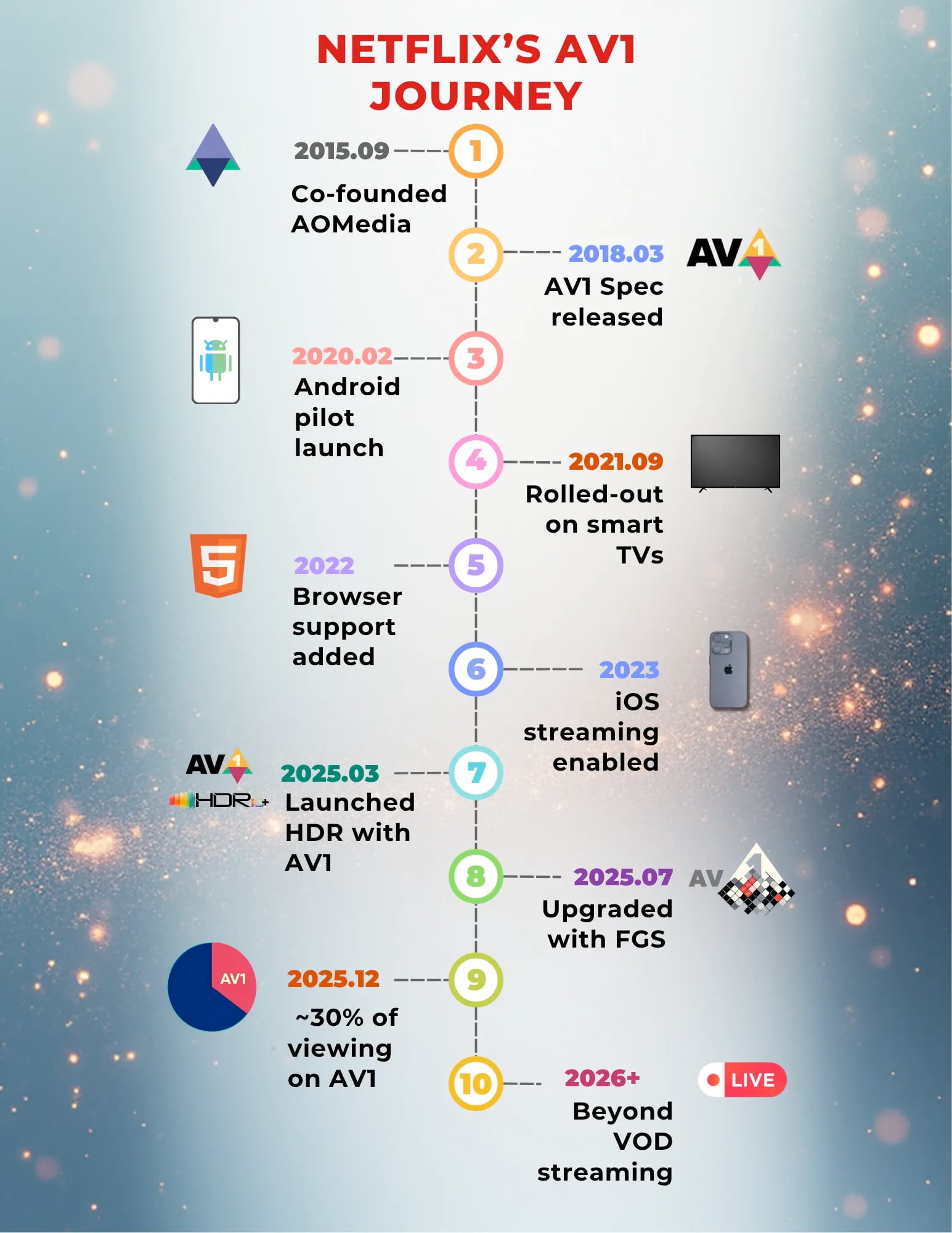
Il 30% dello streaming Netflix è in AV1. Prima Android (2020):
When we first set out to bring AV1 streaming to Netflix members, Android was the ideal starting point. Android’s flexibility allowed us to quickly integrate a software AV1 decoder using the efficient dav1d library, which was already optimized for ARM chipsets in mobile devices.
Poi TV e roba Apple:
Smart TVs depend on hardware decoders for efficient high-quality playback. We worked closely with device manufacturers and SoC vendors to certify these devices, ensuring they are both conformant and performant. This collaborative effort enabled our AV1 streaming to TV devices in late 2021. Shortly thereafter, we expanded AV1 streaming to web browsers (in 2022) and continued to broaden device support. In 2023, this included Apple devices with the introduction of AV1 hardware support in the new M3 and A17 Pro chips.
Nei browser il 40% degli stream sono con dav1d.
(Netflix)
Video.js 10
Nel 2026 uscirà Video.js 10, nuova versione dell'ultrapopolare player video JavaScript. Sarà essenzialmente riprogettato fondendo concetti di Plyr, Media Chrome e Vidstack per renderlo compatibile con lo sviluppo moderno a componenti/React.
How does a screen work? e What is a color space sono i due primi articoli di Making Software. Dettagliati e pieni di figure per capire i concetti base una volta per tutte.
Ho sempre trovato scomodi i player video che quando sono in pausa o quando mostrano i controlli di riproduzione coprono o rendono più scuro il video. Si è unito Safari su macOS 26:
Safari darkens videos on iOS 18, iOS 26, and now macOS 26 when its native video controls are displayed. If you wait several seconds for the video controls to disappear, or you move your Mac mouse pointer out of the frame, the video returns to its normal level of lightness.
Seriously, why??? I thought Liquid Glass was supposed to “bring greater focus to content”? Darkening videos brings less focus to content!
ffmpeg con FDK AAC, AV1 e SRT:
brew tap homebrew-ffmpeg/ffmpeg
brew install homebrew-ffmpeg/ffmpeg/ffmpeg --HEAD --with-fdk-aac --with-svt-av1 --with-srt
TIL tutti questi software nell'ambito video/multimediale sono stati originariamente creati da sviluppatori francesi:
- ffmpeg
- VLC / VideoLAN
- x264 (codec H.264)
- DivX (codec)
- HandBrake (GUI per transcoding)
- Matroska/MKV (formato container)
- GPAC/MP4Box (packager)
- MediaInfo (debugging)
- dav1d (codec AV1 di VideoLAN)
- HLS.js
- TSDuck
(fonte)
Archivio
- 2026
- settembre (28)
- agosto (25)
- luglio (22)
- giugno (32)
- maggio (29)
- aprile (67)
- marzo (55)
- febbraio (40)
- gennaio (54)
- 2025
- dicembre (79)
- novembre (63)
- ottobre (102)
- settembre (22)
Tag
- #ai (144)
- #dev (63)
- #cloud (57)
- #italia (56)
- #digitalizzazione (33)
- #mondo (31)
- #openai (31)
- #business (29)
- #security (26)
- #internet (23)
- #cdn (22)
- #database (21)
- #social (19)
- #reti (19)
- #cloudflare (18)
- #video (18)
- #google (16)
- #aws (16)
- #informazione (16)
- #claude (16)
- #domini (15)
- #browser (15)
- #mobilità (14)
- #storage (14)
- #macos (13)
- #anthropic (13)
- #github (12)
- #scrivere (12)
- #web-dev (12)
- #meta (10)
- #dns (9)
- #pagopa (9)
- #telegram (9)
- #design (8)
- #http (8)
- #email (7)
- #bending-spoons (7)
- #open-source (7)
- #codex (7)
- #git (6)
- #innovazione (6)
- #libri (6)
- #dataviz (6)
- #tlc (6)
- #amazon (6)
- #hetzner (5)
- #privacy (5)
- #ovh (5)
- #microsoft (5)
- #waymo (4)
- #antipirateria (4)
- #agenziadelleentrate (4)
- #streaming (4)
- #mistral (3)
- #app (3)
- #kubernetes (3)
- #whatsapp (3)
- #energia (3)
- #cie (3)
- #ipv6 (3)
- #apple (3)
- #opendata (3)
- #colori (2)
- #eu (2)
- #revolut (2)
- #windows (2)
- #datacenter (2)
- #mobile (2)
- #android (2)
- #javascript (2)
- #trenitalia (2)
- #fastmail (1)
- #broadcasting (1)
- #markdown (1)
- #blog (1)
- #postgres (1)
- #dotnet (1)
- #aruba (1)
- #tim (1)
- #clickhouse (1)
- #rai (1)
- #akamai (1)
- #linux (1)
- #legal (1)
- #redis (1)
- #tailscale (1)