Note di Matteo


#google

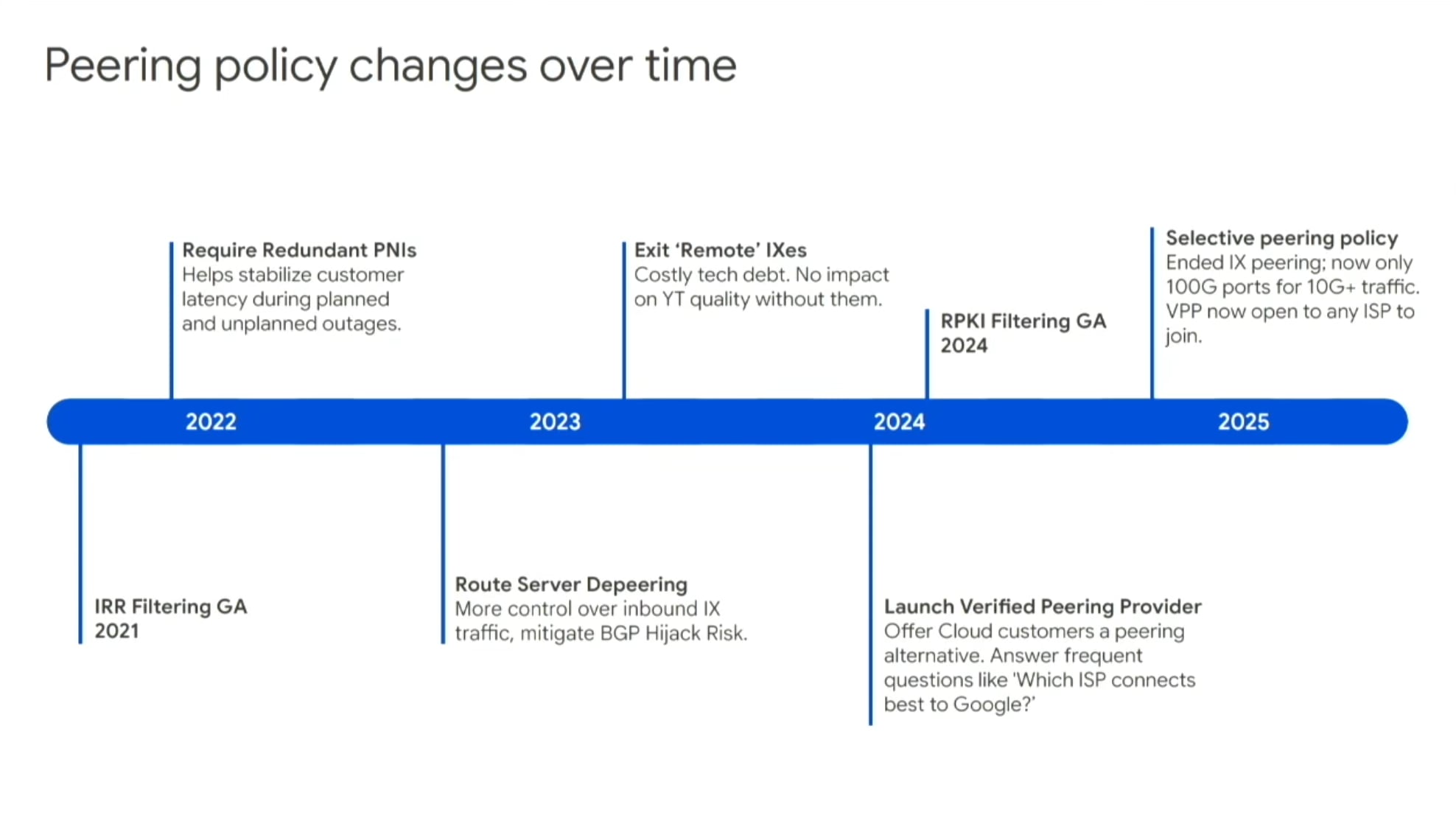
Di recente Google ha cambiato la policy di peering per quanto riguarda Google Cloud e YouTube:

  • Niente più nuovi peering negli IXP pubblici.
  • PNI min. 100 Gbps su traffico minimo di 10 Gbps di picco (settlement free).
  • Per tutto il resto il consiglio è di affidarsi a uno degli ISP "certificati" di questa lista (IP transit a pagamento, presumo), che hanno almeno due interconnessioni in almeno un'area metropolitana di Google.

(video)

Private peering allows a network to connect directly with Google over a dedicated physical link known as a private network interconnect (PNI).

Google offers 100G and 400G private peering (PNI) at the facilities listed in our PeeringDB entry. Note that this type of direct peering occurs at common physical locations, and both Google and any peering network bear their own costs in reaching any such location.

Google no longer accepts new peering requests at internet exchanges (IXPs). However, Google maintains dedicated connectivity to the internet exchanges (IXPs) listed in our PeeringDB entry. We also maintain existing BGP sessions across internet exchanges where we are connected. For networks who do not meet our PNI requirements Google will serve those networks via indirect paths.

(peering.google.com)

#169 /
18 novembre 2025
/
22:42
/ #reti#google

TIL Nano Banana per la generazione di immagini AI non è un diffusion model ma autoregressive, a differenza delle generazioni precedenti di Imagen e a differenza di DALL-E 2 e 3. E Midjourney e Stable Diffusion.

Of note, gpt-image-1, the technical name of the underlying image generation model, is an autoregressive model. While most image generation models are diffusion-based to reduce the amount of compute needed to train and generate from such models, gpt-image-1 works by generating tokens in the same way that ChatGPT generates the next token, then decoding them into an image. It’s extremely slow at about 30 seconds to generate each image at the highest quality (the default in ChatGPT), but it’s hard for most people to argue with free.

In August 2025, a new mysterious text-to-image model appeared on LMArena: a model code-named “nano-banana”. This model was eventually publically released by Google as Gemini 2.5 Flash Image, an image generation model that works natively with their Gemini 2.5 Flash model. Unlike Imagen 4, it is indeed autoregressive, generating 1,290 tokens per image. After Nano Banana’s popularity pushed the Gemini app to the top of the mobile App Stores, Google eventually made Nano Banana the colloquial name for the model as it’s definitely more catchy than “Gemini 2.5 Flash Image”.

#154 /
15 novembre 2025
/
20:57
/ #ai#google#openai

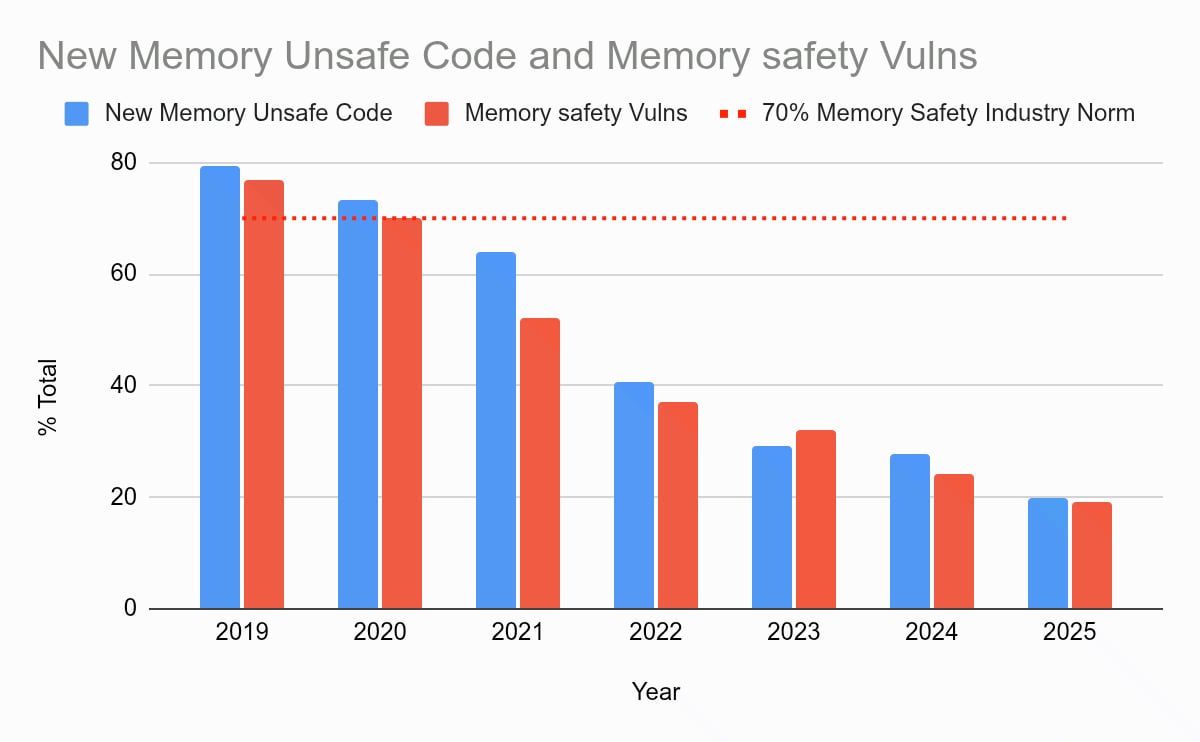
Google sta riscrivendo pezzi di Android che prima erano in C++ in Rust, con notevoli risultati dal punto di vista della sicurezza:

With roughly 5 million lines of Rust in the Android platform and one potential memory safety vulnerability found (and fixed pre-release), our estimated vulnerability density for Rust is 0.2 vuln per 1 million lines (MLOC).

Our historical data for C and C++ shows a density of closer to 1,000 memory safety vulnerabilities per MLOC. Our Rust code is currently tracking at a density orders of magnitude lower: a more than 1000x reduction.

#147 /
14 novembre 2025
/
10:02
/ #google#android#dev

Magika 1.0

Scrivevo un anno e mezzo fa:

In uno dei suoi tremila blog ieri Google ha annunciato anche un nuovo interessante progetto open source chiamato Magika. Serve a identificare il tipo di un file in automatico e si basa su un modello deep learning molto piccolo e molto efficiente, con tempi di inferenza di pochi millisecondi anche su CPU.

Finora il riconoscimento del tipo di un file era basato sul suo nome (es. estensione .pdf) o sull'analisi dei "magic byte", delle sequenze binarie presenti all'inizio dei file che in molti casi ne permettono l'identificazione. Magika è però di gran lunga superiore rispetto a queste tecniche, con le metriche precision, recall e F1 che superano il 99% e per alcuni tipi di file raggiungono il 100%.

Magika si può usare facilmente con Python o JavaScript, infatti la demo ufficiale funziona nel browser: https://google.github.io/magika/

Ora Magika ha raggiunto la 1.0:

Today, we are happy to announce the release of Magika 1.0, a first stable version that introduces new features and a host of major improvements since last announcement. Here are the highlights:

  • Expanded file type support for more than 200 types (up from ~100). -A brand-new, high-performance engine rewritten from the ground up in Rust.
  • A native Rust command-line client for maximum speed and security.
  • Improved accuracy for challenging text-based formats like code and configuration files.
  • A revamped Magika Python and TypeScript module for even easier integrations.

Prestazioni notevoli:

Magika is able to identify hundreds of files per second on a single core and easily scale to thousands per second on modern multi-core CPUs thanks to the use of the high-performance ONNX Runtime for model inference and Tokio for asynchronous parallel processing, For example, as visible in the chart below, on a MacBook Pro (M4), Magika processes nearly 1,000 files per second.
#137 /
9 novembre 2025
/
20:26
/ #ai#google#open-source

We’ve now seen reports of non-developers trying to use Gemma in AI Studio and ask it factual questions. We never intended this to be a consumer tool or model, or to be used this way. To prevent this confusion, access to Gemma is no longer available on AI Studio. It is still available to developers through the API.

(Google)

#128 /
2 novembre 2025
/
23:46
/ #ai#google

"Google is a tech island"

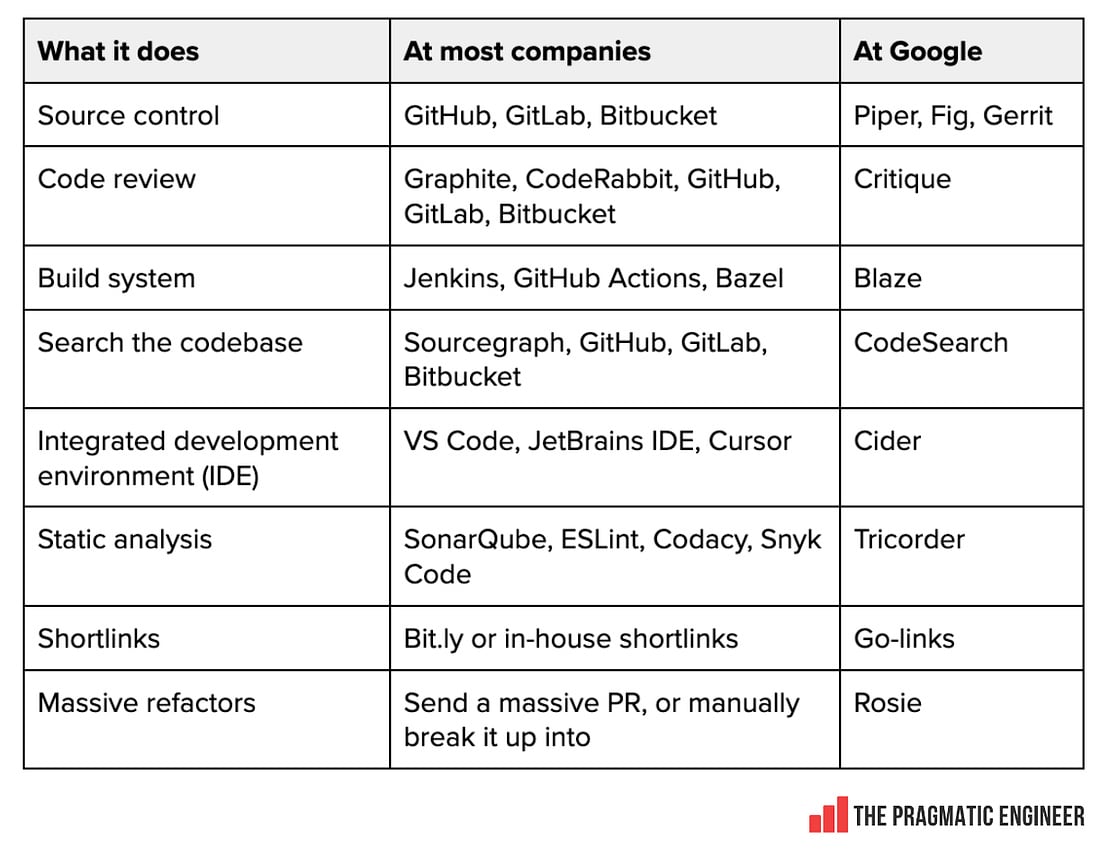
Google’s infrastructure is distinct from every other tech company because it’s all completely custom: not just the infra, but also the dev tools. Google is a tech island, and engineers joining the tech giant can forget about tools they’re used to – GitHub, VS Code, Kubernetes, etc. Instead, it’s necessary to use Google’s own version of the tool when there’s an equivalent one.

(The Pragmatic Engineer)

#40 /
4 ottobre 2025
/
17:57
/ #google#dev

Come funziona la tecnologia della pubblicità online

Dalla newsletter Big Tech on Trial:

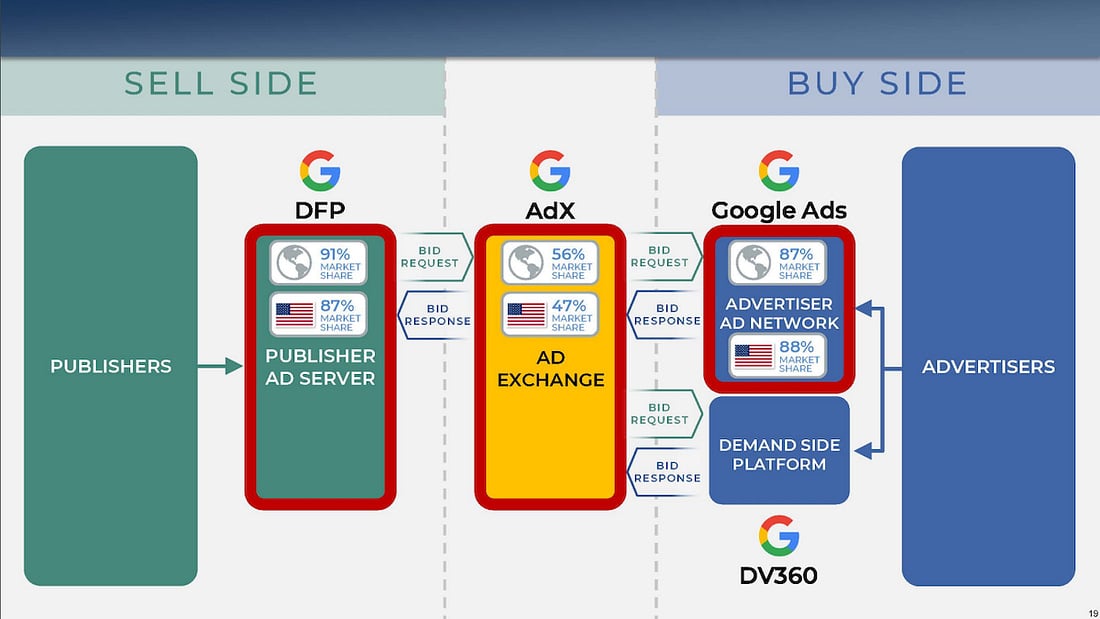
The underlying structure of targeted internet advertising is completely different from the old days.

Instead of individual websites selling ad space, they hire a service to manage their space for them. This is a “publisher ad server,” and it has a large inventory of websites looking to sell space, which is why we’ll call it the “sell side” for short. On the “buy side” is an “advertiser ad network,” which similarly has a large inventory of advertisers looking for space to post ads. (Judge Brinkema found Google not liable for illegally monopolizing the buy side.)

In between the publisher ad server (the sell side) and the advertiser ad network (the buy side) is an “advertising exchange” which matches up ads with spaces by holding a lightning speed auction. In the time it takes a website to load after you click on it (maybe half a second), an ad exchange auctions off the advertising space on that webpage to the highest bidder among all the advertisers in the ad network inventories.

The three parts together are known as the “ad tech stack.” Companies compete to provide these services on the sell side, ad exchange, and buy side, and these are the three markets Google dominates with DFP, AdX, and Google Ads, respectively. Here’s what that all looks like visually:

#29 /
1 ottobre 2025
/
15:45
/ #google#internet

La dimensione di Google

Il monopolio di Google nei servizi web:

  • #1 and #2 most-visited websites: Google.com is the most popular website in the world, and YouTube is #2. Google.com gets 85 billion monthly visits – more than the next 9 most-visited websites, combined
  • Android: around 4.2 billion users (circa 75% of global smartphone market share)
  • Chrome: circa 3.45 billion users (around 65% of global browser market share)
  • Gmail: approximately 1.8 billion active users

Con questi risultati finanziari:

In absolute terms, Google is currently the most profitable company in the world; it generated $115 billion in profit (net income) over the past 12 months on $371 billion in revenue.

At its core, Google is still an advertising company; around 75% of revenue comes from selling ads on Google Search, YouTube, and the Google Ads network.

E questa quantità di staff tecnico:

Google employs around 60,000 software engineers [...] This makes Google one of the largest employers of software engineers. [...] Google runs more than 25 engineering offices.

(The Pragmatic Engineer)

#14 /
29 settembre 2025
/
08:54
/ #google#internet