La region OVHcloud di Milano con 3 AZ è live.

La region OVHcloud di Milano con 3 AZ è live.
AWS Lambda networking over IPv6 is here!
Numeri sulla migrazione di Mezmo da Elasticsearch a Quickwit.
Con Elasticsearch:

(800 MB - 2 GB di integestion al secondo)
Con Quickwit (che è pazzesco!):

L'nginx ingress di Kubernetes sarà dismesso (nessun aggiornamento nemmeno di sicurezza) da marzo 2026, senza evidenti alternative equivalenti. Wow.
PostgreSQL extensions on cloud monitora quali estensioni sono presenti su quali cloud provider che offrono PostgreSQL managed. Utile! E dato che OVHcloud e UpCloud si basano su tecnologia Aiven, sono implicitamente inclusi nel confronto.
Charting the life of an Amazon CloudFront request. Un po' di dettagli su come funziona la CDN AWS e l'ordine delle varie fasi di elaborazione di una richiesta.
Storia molto interessante di scaling: come Nanit ha risparmiato 500mila $ all'anno implementando un S3 in memoria, e i problemi di scaling (networking e memory leak) incontrati una volta deployato con il traffico in produzione di diversi GB/s.
Today, us-east-1 is the single largest AWS region. It generates an estimated 2.5GW capacity spread across 6 availability zones (AZs) and 158 data centers. In comparison, the second-largest region is us-west-1 in Oregon, with an estimated 1.7GW capacity spread across 4 availability zones (AZs) and 48 data centers. Not only is us-west-1 about smaller than us-east-1, but it also charges higher per-instance prices than us-east-1.
TIL AWS chiama le istanze EC2 "droplet" internamente, come DigitalOcean:
The first subsystem is DropletWorkflow Manager (DWFM), which is responsible for the management of all the underlying physical servers that are used by EC2 for the hosting of EC2 instances – we call these servers “droplets”.
I database PostgreSQL managed di Ubicloud sono ora anche su infrastruttura AWS. Ubicloud è olandese anche se controllata da Ubicloud Inc., statunitense.
Giornata nerissima per AWS: siamo a 14 ore di problemi diffusi in us-east-1, a varie fasi e con diversi servizi coinvolti.
Qualche dettaglio in più sui nuovi piani Hetzner Cloud:
- The CX (cost-optimized x86 cloud servers) Gen3 line is no longer Intel-only, but uses the previous generation of both Intel and AMD servers (from CX Gen1, CX Gen 2, and CPX Gen1). This is still the go-to option for budget needs.
- The CPX (still shared, but performance-optimized cloud servers) Gen2 has been refreshed with a more recent AMD hardware (Genoa), offering both better price and performance.
- The CAX (costs-optimized ARM cloud servers) and CCX (cloud servers with dedicated vCPUs) lines did not receive a hardware update as far as I can tell.
GitHub Pages, our static site hosting service, has always had a very simple architecture. From launch up until around the beginning of 2015, the entire service ran on a single pair of machines (in active/standby configuration) with all user data stored across 8 DRBD backed partitions. Every 30 minutes, a cron job would run generating an nginx map file mapping hostnames to on-disk paths.
There were a few problems with this approach: new Pages sites did not appear until the map was regenerated (potentially up to a 30-minute wait!); cold nginx restarts would take a long time while nginx loaded the map off disk; and our storage capacity was limited by the number of SSDs we could fit in a single machine.
Despite these problems, this simple architecture worked remarkably well for us — even as Pages grew to serve thousands of requests per second to over half a million sites.
Hailey Somerville sul blog GitHub.
Cambia la gamma di piani cloud Hetzner, ora divisi in:
Il prezzo minimo mi pare sia leggermente più basso rispetto a prima. Prima la dvisione era solo tra Shared e Dedicated.
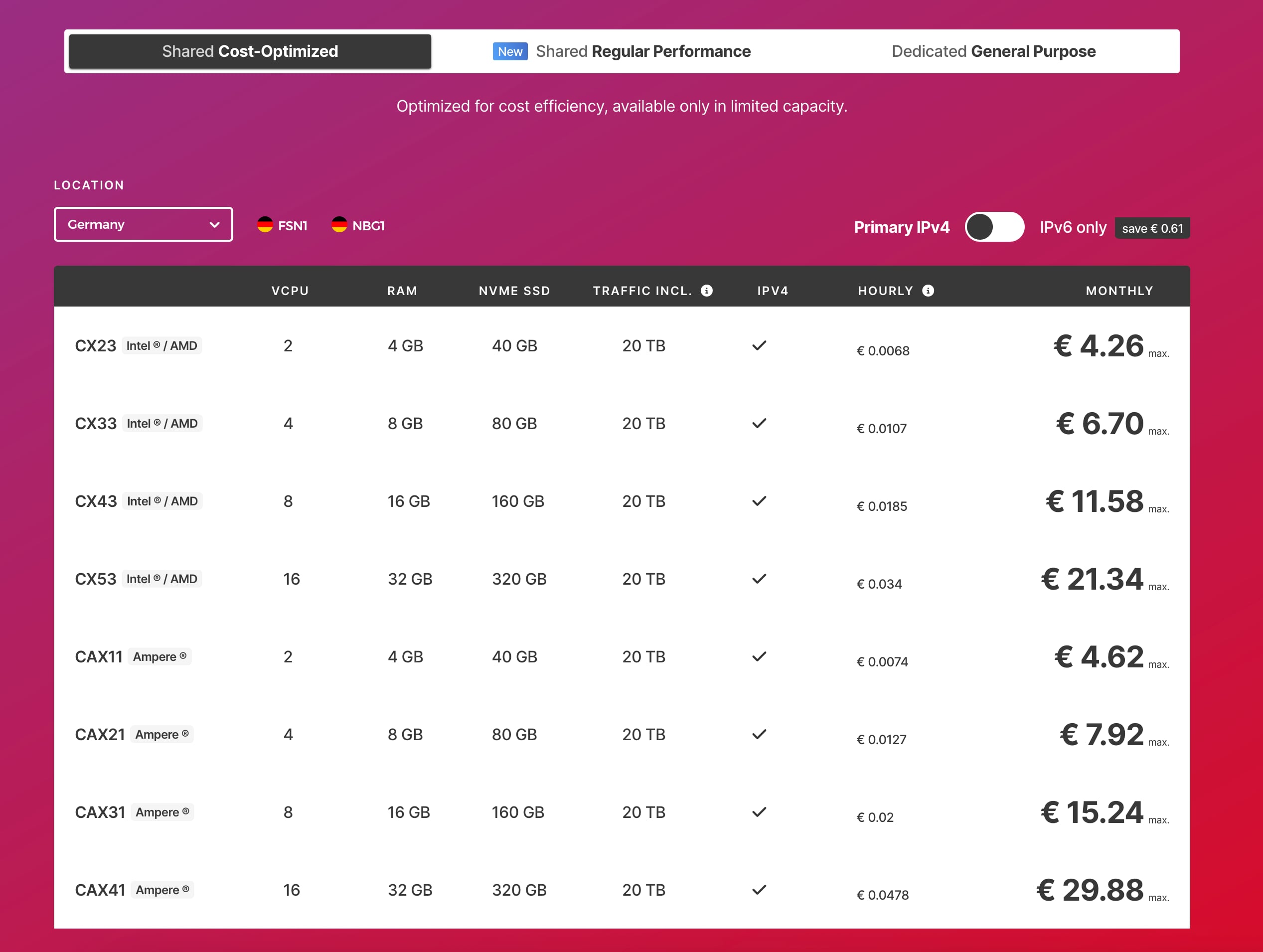
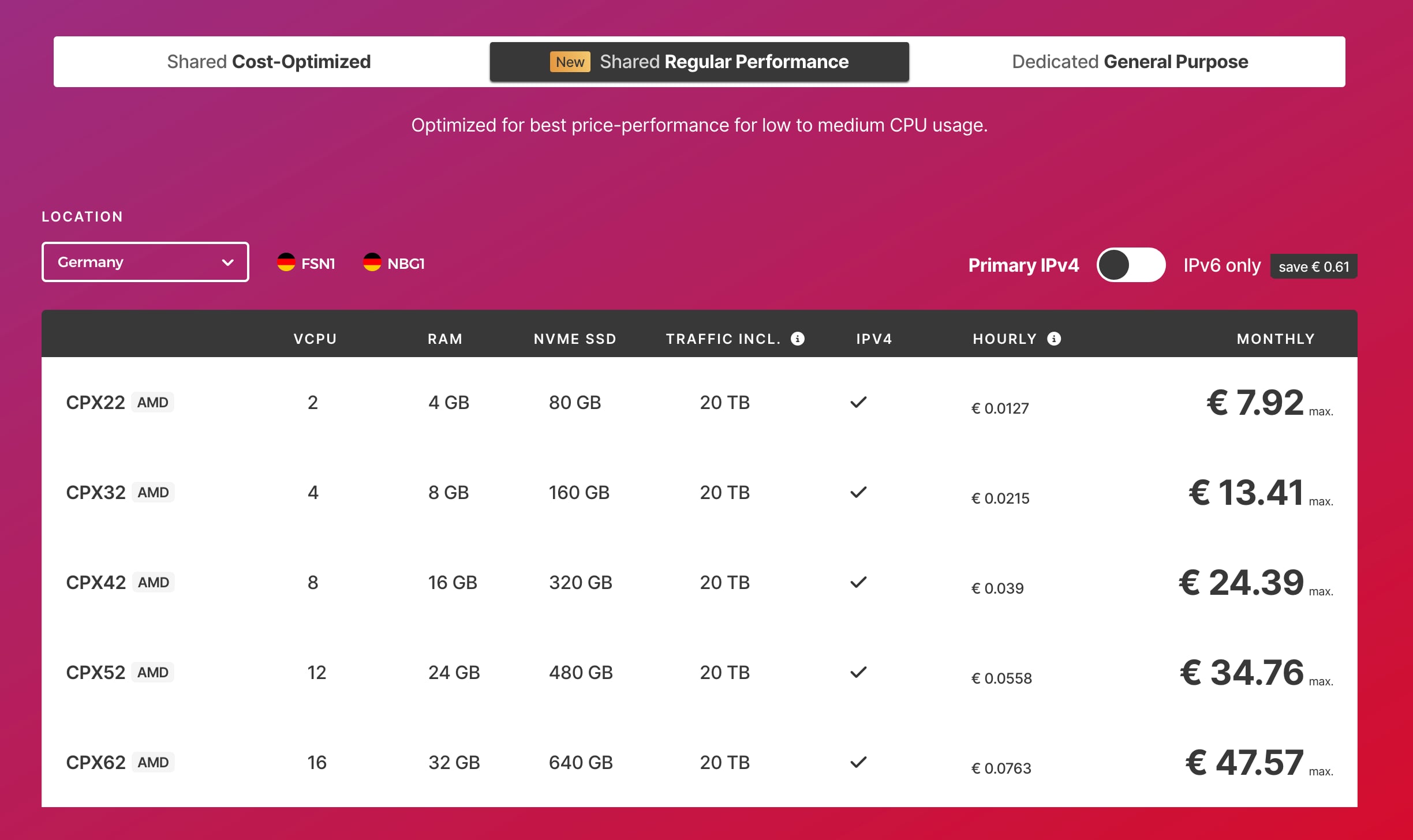
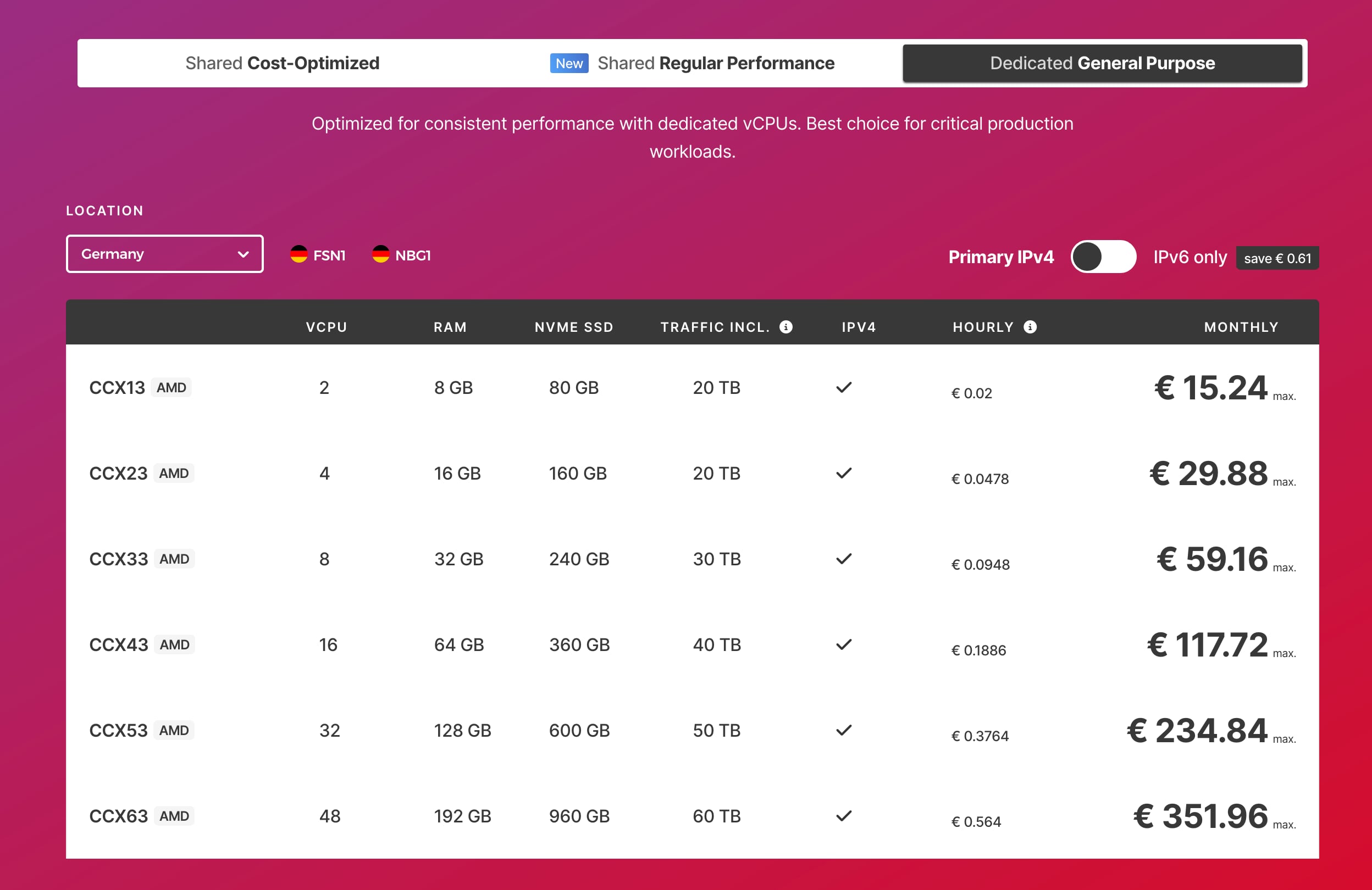
I prezzi qua sono IVA 22% inclusa e incluso un IPv4.
GitHub si sposta su Microsoft Azure:
Vladimir Fedorov, GitHub’s chief technology officer, made the Azure migration announcement internally earlier this week, noting that GitHub is currently struggling with data center capacity. GitHub is currently hosted on the company’s own hardware, centrally located in Virginia. “We are constrained on data server capacity with limited opportunities to bring more capacity online in the North Virginia region,” Fedorov writes in a note to GitHub employees, or GitHubbers as they’re known internally.
To ensure the move to Azure is completed within 12 months, GitHub’s leadership team is asking employees to delay new features in favor of the Azure migration. “We will be asking teams to delay feature work to focus on moving GitHub,” Fedorov says. [...]
GitHub is now aiming to move fully off its own data centers within two years. This gives GitHub 18 months to execute its migration, with a six-month buffer for any delays. Most of the work will be completed over the next 12 months, according to Fedorov.
Magari è la volta buona che abilitano IPv6.
Fly.io ha annunciato che ridurrà significativamente il numero di region globali, passando da 35 a 18! In Sud America si passa da 4 region a solo una, in Europa spariscono Polonia, Spagna e Romania. In America del Nord ne spariscono ben 9!
Uh, bunny.net lancerà una nuova status page e metterà a disposizione il prodotto costruito in-house a tutti per creare le proprie status page, con health check, iscrizioni, changelog, ecc.