La nuove funzioni AI di Telegram basate sulla rete distribuita Cocoon sono evidentemente powered by un LLM cinese (Qwen, immagino):
🇹🇼 The AI text editor's error correction function refuses to work when mentioning the country Taiwan because it corrects it to something like «Taiwan is a state of the PRC».
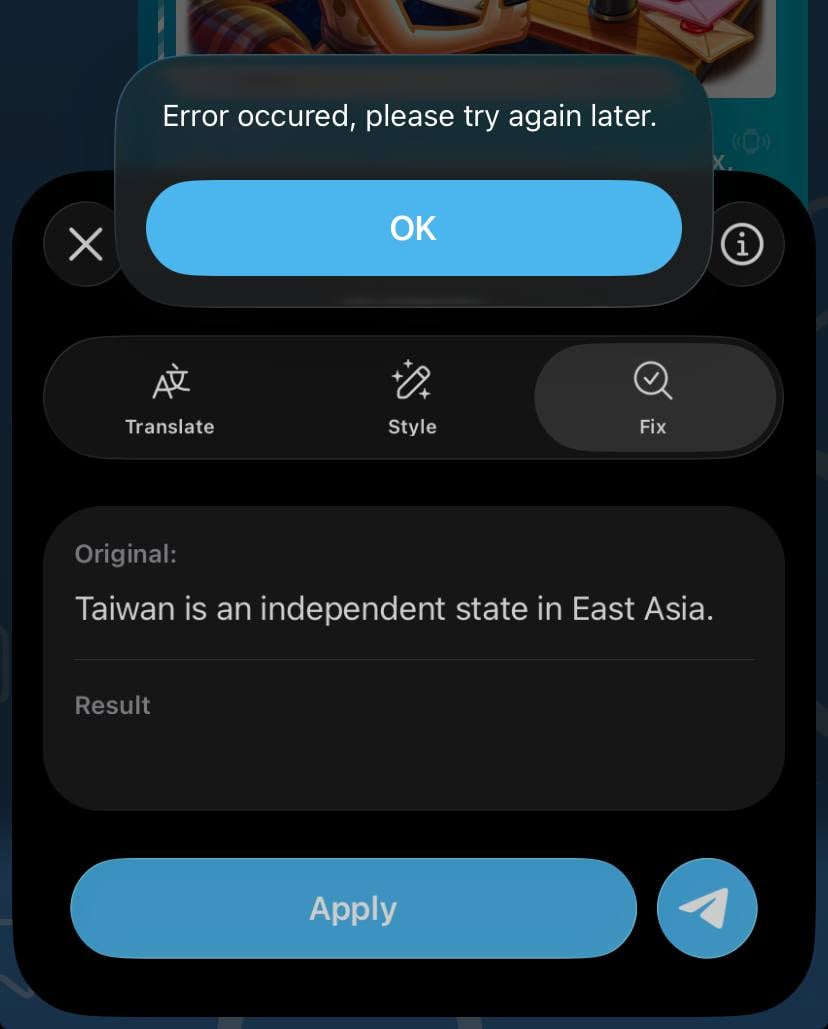
Dal canale Telegram News and Tips.
Altra conferma, dal Wall Street Journal, che Sora è stato dismesso perché usava troppe GPU:
OpenAI was weeks away from finishing work on a new AI model, code-named Spud, and needed to free up more computing resources to power the coding and enterprise products that would run on it. AI chips are the most precious commodity at any leading research lab, and at OpenAI, Sora was eating up far too many of them.
OpenAI’s researchers are able to track how AI chips are allocated between different groups through an internal dashboard. Some of them were surprised by the amount of computing resources the company gave to the Sora team, given that video-generation tools didn’t make much money, nor improve the capabilities of its language models.
Mentre sempre il WSJ racconta un po' della backstory che ha portato alla scissione di Dario Amodei e quindi Anthropic da OpenAI, nel 2020. Il riassunto è che il tutto è in mano a cricca di tech bros un po' pazzi e dalla dubbia etica che litigano continuamente tra loro per il potere. Cioè business as usual per gli standard della Silicon Valley.
In the next 6 to 12 months, the engineer who makes the difference is the one who can look at an agent’s output and say “this is wrong for reasons you can’t see from where you’re standing.” The one who knows which doors are one-way, which abstractions will calcify, and which corners will cost you later.
Boris Tane in Slop Creep: The Great Enshittification of Software
Pantio sta di fatto ricreando "Be Right Back" di Black Mirror (S2E1): un'AI riproduce la voce di una persona cara morta con interazioni in tempo reale, per aiutare a superare un lutto (si suppone). La prima metà dell'episodio BM è effettivamente completamente replicabile dalle AI moderne, la seconda no ahah (no spoiler).
La dismissione di Sora serve a liberare GPU, scrive Alex Heath:
While the outside world speculates about motivations, the reality is that OpenAI is making trade-offs in how it allocates compute across research, product launches, and inference. Video generation is extraordinarily GPU-intensive, and every chip powering Sora clips was one not powering what OpenAI is focusing on right now: Codex and its enterprise products. OpenAI employees are under tremendous pressure to catch up with Anthropic on coding around productizing it in a way that’s accessible to non-engineers, like Claude Cowork has done.
OpenAI che dismette Sora (generazione video) completamente, o così sembra, è un bel plot twist. Forse i video generati con AI non hanno questo gran futuro.
We’re saying goodbye to Sora. To everyone who created with Sora, shared it, and built community around it: thank you. What you made with Sora mattered, and we know this news is disappointing.
We’ll share more soon, including timelines for the app and API and details on preserving your work. – The Sora Team
L'approccio anti-developer di Anthropic che il feedback degli utenti su Claude Code è imbarazzante:
Boh.
ChatGPT usa questa sintassi per le citazioni:
\uE200cite\uE082turn2search5\uE201
Oppure con due citazioni:
\uE200cite\uE082turn2search5\uE082turn2news1\uE201
Dove i simboli Unicode sono "caratteri" privati invisibili usati così:
U+E200U+E082U+E201Scelta interessante.
Gli ID (es. turn2search5) sono presi direttamente dall'output dei tool, ad esempio:
{
  "search_results": [
    {
      "ref_id": "turn2search0",
      "title": "Eiffel Tower history",
      "url": "https://example.com/eiffel-history"
    },
    {
      "ref_id": "turn2search1",
      "title": "Britannica - Eiffel Tower",
      "url": "https://example.com/britannica-eiffel"
    },
    {
      "ref_id": "turn2search2",
      "title": "Paris tourism - Eiffel Tower",
      "url": "https://example.com/paris-tourism"
    }
  ]
}
Mistral sembra invece usare questa sintassi:
:refs[1-3,7,9]
Dove 3, 7 e 9 sono indici della lista di risultati di un tool, l'1 non so cosa sia.
Esempio di tool output:
{
  "0": {
    "url": "https://trytako.com/embed/OQENsP2y2BMZd8fnd6oa/",
    "title": "Unit Calculator: 330.0 Inchs to Meters",
    "description": "Questa scheda mostra la conversione da Pollice a Metro...",
    "snippets": [],
    "date": null,
    "rank": 0,
    "source": "tako",
    "metadata": {},
    "can_open": false,
    "content_type": "tako_widget"
  },
  "1": {
    "url": "https://www.vacanzeparigine.it/torre-eiffel/",
    "title": "Come visitare la torre Eiffel - Vacanze Parigine",
    "description": "Gli altri piani rimarranno disponibili alla visita... secondo piano: a 115,88 metri d’altezza e 669 scalini.",
    "snippets": [
      "CHIUSURA: a causa di lavori di manutenzione la cima della torre Eiffel (il terzo piano) rimarrà chiusa dal 5 gennaio al 6 febbraio 2026 (info). Gli altri piani rimarranno disponibili alla visita. INCREMENTO TARIFFARIO: il costo dei biglietti subirà un aumento a partire dalle visite dal 12 gennaio 2026 in poi. ... secondo piano: a 115,88 metri d’altezza e 669 scalini.",
      "Considerando l’antenna, la torre Eiffel raggiunge i 330 metri d’altezza..."
    ],
    "date": "2026-01-12T08:22:43",
    "rank": 0,
    "source": "brave",
    "metadata": {},
    "can_open": true,
    "content_type": "web_page"
  },
}
Claude usa invece questa sintassi più esplicita:
<cite index="2-1">Label</cite>
Dove 2 sarebbe il documento di riferimento mentre 1 la frase citata. Quindi si possono citare più frasi e anche più documenti:
<cite index="2-1:3">Label</cite>
<cite index="1-2,3-4">Label</cite>
Gli indici sono estratti dagli output dei tool, ad esempio:
<document index="2">
  <source>La Torre Eiffel, Sito UFFICIALE: biglietti, info, notizie,…</source>
  <document_content>
    <span index="2-1">Alta 330 metri, la Torre Eiffel ha una storia affascinante
    che risale alla fine del XIX secolo. Il suo progettista, l'ingegnere Gustave
    Eiffel, era famoso per la realizzazione di ponti, viadotti e capriate
    metalliche, già prima di costruire ...</span>
  </document_content>
</document>
Claude Code riscrive chardet ("Python character encoding detector") con prestazioni 48 volte superiori alla versione precedente. La licenza open source cambia da LGPL a MIT perché è un rewrite totale. È un lavoro indipendente oppure un lavoro derivato? La questione si ripresenterà sempre più spesso.
Last week, Dan Blanchard, the maintainer of chardet—a Python library for detecting text encodings used by roughly 130 million projects a month—released a new version. Version 7.0 is 48 times faster than its predecessor, supports multiple cores, and was redesigned from the ground up. Anthropic's Claude is listed as a contributor. The license changed from LGPL to MIT.
Blanchard's account is that he never looked at the existing source code directly. He fed only the API and the test suite to Claude and asked it to reimplement the library from scratch. The resulting code shares less than 1.3% similarity with any prior version, as measured by JPlag. His conclusion: this is an independent new work, and he is under no obligation to carry forward the LGPL.
Humans create the need for systems. Models excel with context, but humans define evolution.
Shao-Qian Mah, ricercatore OpenAI nel team Codex, da How Codex is built (The Pragmatic Engineer)
Un mio commento sul Post in risposta all'articolo Per le intelligenze artificiali i PDF sono un problema, che si basa sul nulla:
L'articolo solleva il problema sbagliato. L'OCR serve solo se il contenuto è stato rasterizzato o è frutto di scansione, che non è la normalità (fuori dalla PA italiana almeno).
Il formato PDF resta però comunque problematico perché non contiene concetti come "paragrafo di testo", "pié di pagina" o "tabella" ed è quindi molto difficile associare le singole parole/righe di testo (solitamente leggibili senza OCR) al flusso della pagina. In casi complessi come pagine a più colonne servono una miriade di euristiche per provare a ricostruire il testo correttamente, perché non c'è legame tra gli elementi.
Non è un problema risolvibile al 100% ma è comunque in gran parte superato e negli ultimi 3 anni è spuntata diversa ricerca e molti nuovi strumenti anche open source per attaccare il problema.
Detto questo, del presunto "obiettivo di lungo termine" di sostituire il formato PDF sinceramente non trovo traccia e non ne ho mai sentito parlare pur avendo realizzato sistemi AI che ingeriscono PDF. A prova della tesi l'articolo menziona solo questa startup israeliana completamente sconosciuta nel settore, il cui sito sembra indicare che sia semplicemente una piattaforma cloud (a cui non ci si può nemmeno iscrivere), più che un formato di file. Di cosa stiamo parlando?
C'è un bug in Claude Desktop legato agli scheduled task (nuova feature appena lanciata) che manda il codice in loop infinito:
Users with scheduled tasks in Claude Cowork or Claude Code who are in a timezone that observed daylight saving time last night were affected by an infinite loop. When the app tried to locate tasks scheduled during the “skipped” hour, it couldn’t resolve them and got stuck.
Ho l'istinto di dire che è proprio un bug da vibe coding, ma in realtà lavorare con le date e i fusi orari è fonte di numerosi bug da quando la programmazione esiste.
Un grafico di Cursor sull'uso degli agenti AI in confronto alla funzione Tab (che mi viene da chiamare "vecchia", eppure esiste da meno di 4 anni) nello sviluppo di software:
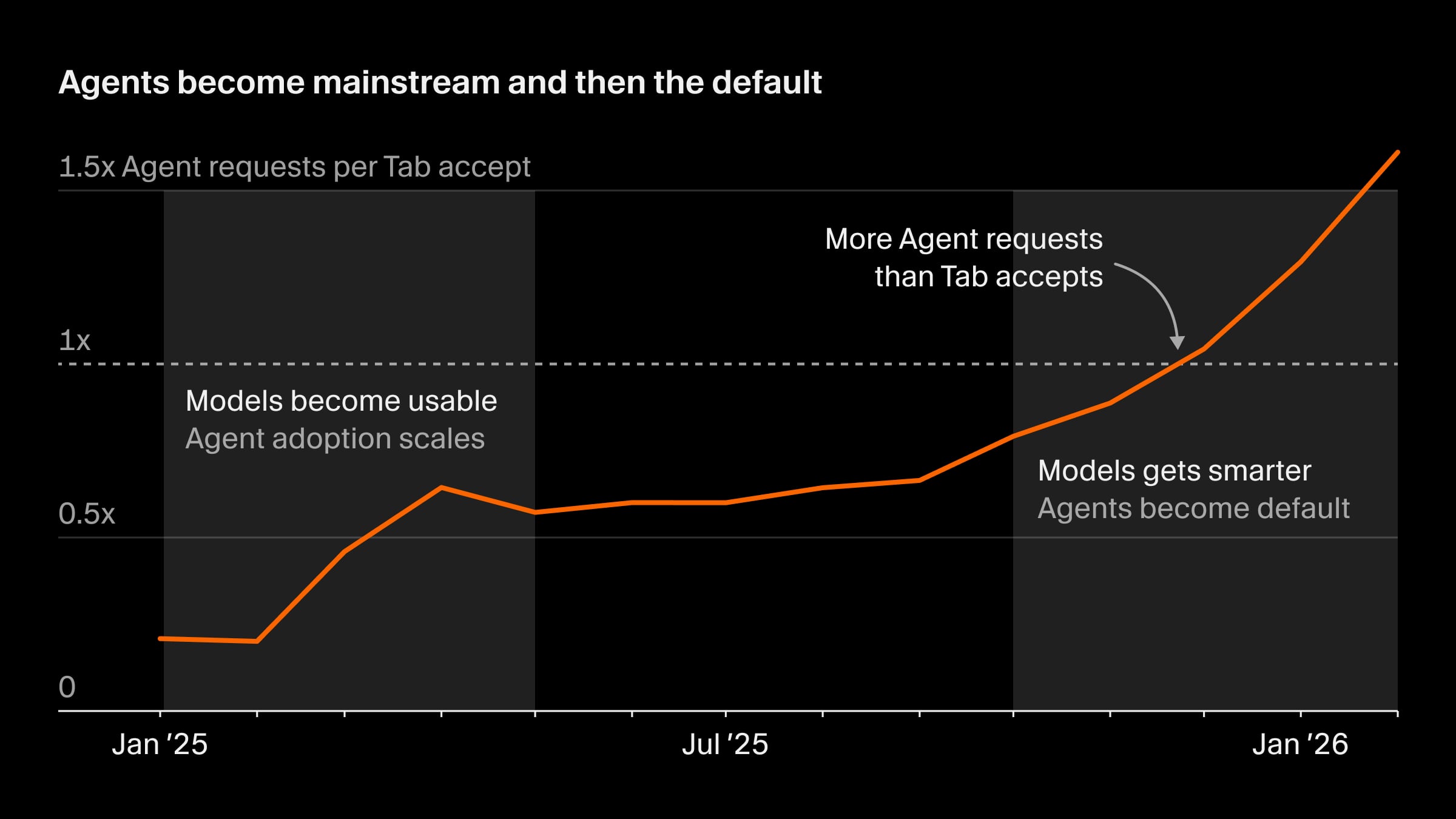
A conferma della recente percezione che tra l'autunno e l'inverno 2025/2026 c'è stato un (incredibile) cambio di passo nello sviluppo software con l'AI.
Questa mi ha fatto ridere: prompt injection tramite un issue GitHub preso in carico da un workflow GitHub Actions che esegue Claude senza limiti di permessi:
Cline’s (now removed) issue triage workflow ran on the issues event and configured the claude-code action with allowed_non_write_users: "*", meaning anyone with a GitHub account can trigger it simply by opening an issue. Combined with --allowedTools "Bash,Read,Write,Edit,Glob,Grep,WebFetch,WebSearch", this gave Claude arbitrary code execution within default-branch workflow.
Someone has to prompt the Claudes, talk to customers, coordinate with other teams, decide what to build next. Engineering is changing and great engineers are more important than ever.
Boris Cherny, creatore di Claude Code
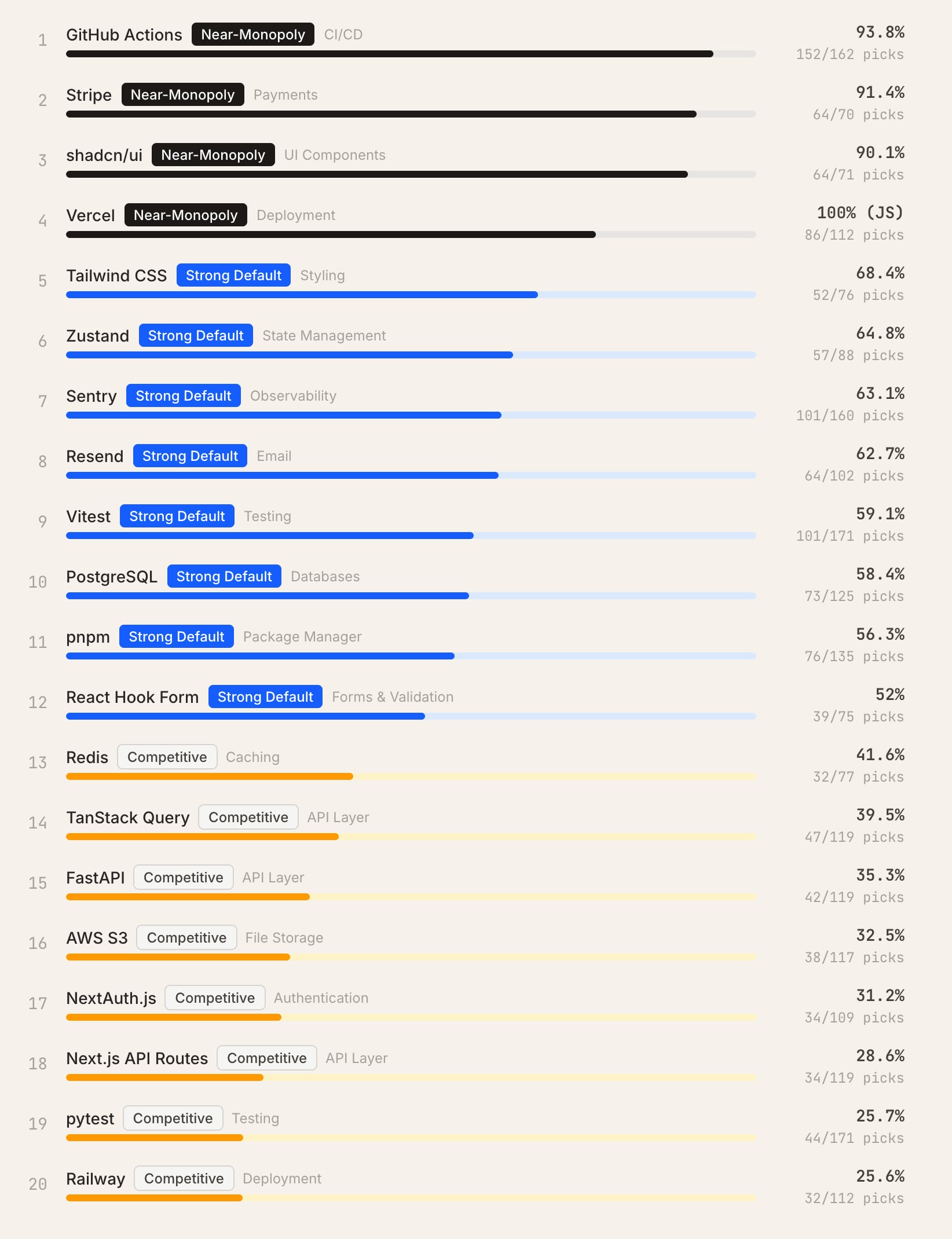
Benchmark super interessante che misura le scelte di stack tecnico dei modelli Anthropic (via Claude Code):
The big finding: Claude Code builds, not buys. Custom/DIY is the most common single label extracted, appearing in 12 of 20 categories (though it spans categories while individual tools are category-specific). When asked “add feature flags,” it builds a config system with env vars and percentage-based rollout instead of recommending LaunchDarkly. When asked “add auth” in Python, it writes JWT + bcrypt from scratch. When it does pick a tool, it picks decisively: GitHub Actions 94%, Stripe 91%, shadcn/ui 90%.
Tutti i dettagli nel report completo.
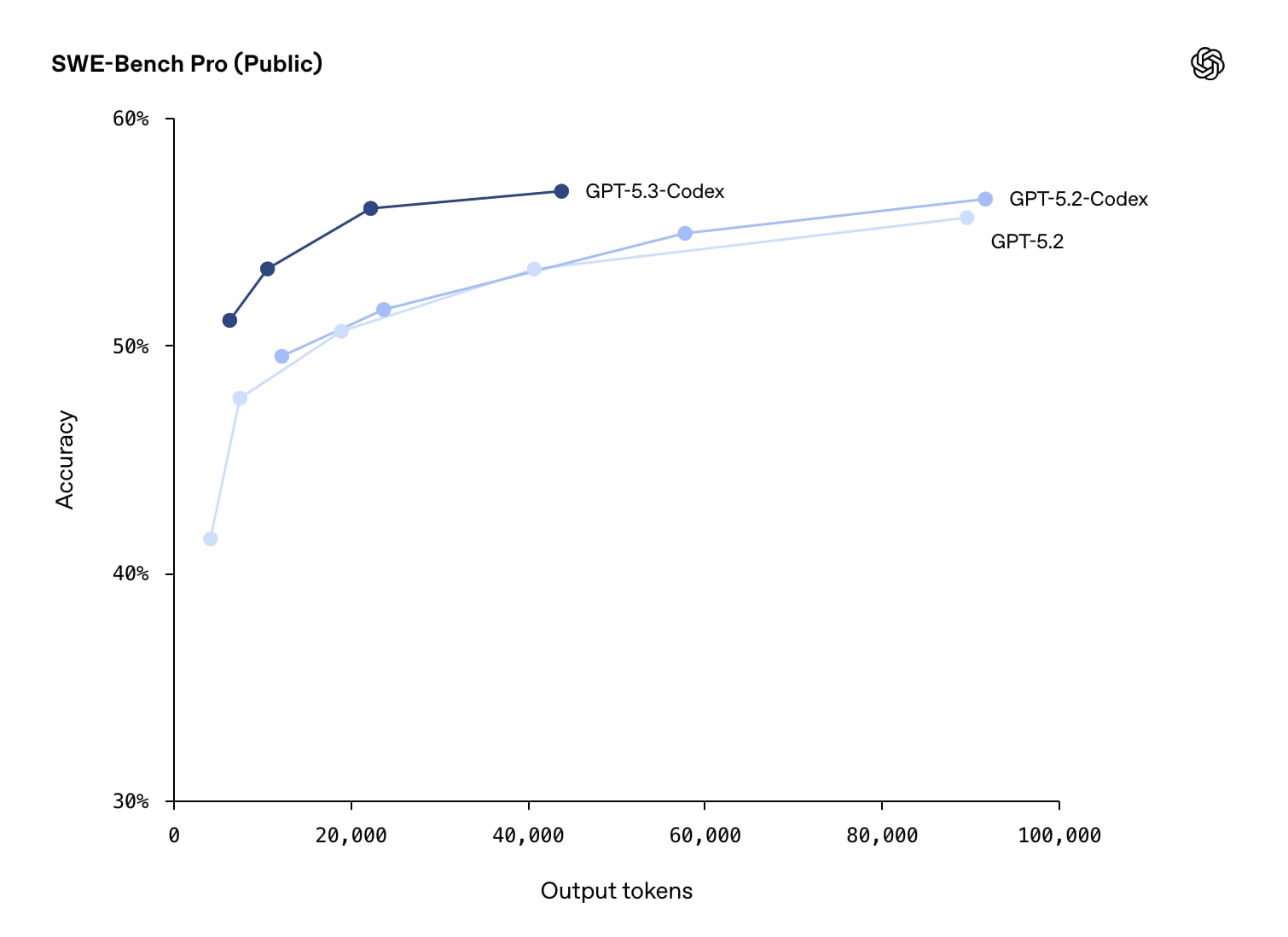
I progressi degli LLM nella programmazione sono ancora impressionanti. GPT-5.3 Codex supera la precedente versione nel benchmark SWE-Bench Pro pur usando la metà dei token di output (ragionamento incluso) e costando quindi (circa) la metà.
Il mio messaggio medio a Codex (GPT-5.2 Codex medium):

Non capisco perché a molti piaccia più di Claude Code.